The Food and Agriculture Organization of the United Nations (FAO) and the United Nations Industrial Development Organization (UNIDO) have announced the successful completion of the design phase of a landmark national strategy aimed at transforming the Republic of Moldova's table grape sector into a competitive, climate-resilient and inclusive industry.
The comprehensive strategy that includes a National Investment Plan is the result of the two-year project on "Promoting long-term, sustainable, green development and resilience of the table grape value chain" officially validated by key partners during a workshop held in Chișinău. Informed by the recommendations based on a comprehensive value chain analysis conducted using the Agrifood Systems Transformation Accelerator (ASTA) methodology, the strategic programme provides a roadmap for the sector's future development. Under an optimistic scenario, it is expected to attract an estimated USD 98 million in total investments by 2036. This level of investment would increase the annual value of table grape exports by 60 percent, equivalent to approximately USD 38 million.
 © FOA.org
"The table grape sector occupies an important place in the agriculture of the Republic of Moldova. We have tradition, we have experience and, in recent years, we have started introducing modern technologies such as pergola systems and cultivating more competitive varieties. That said, our potential extends well beyond our achievements to date," said Andrian Digolean, State Secretary of the Ministry of Agriculture and Food Industry.
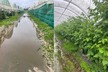
The new long-term vision aims for the Republic of Moldova's table grape value chain to be competitive, climate-resilient and inclusive, enabling growers of all sizes to access premium international markets. To achieve this, the plan focuses on four interconnected outcomes, starting with robust climate adaptation measures. These include developing new irrigation basins with a capacity for water storage of 1.5 million cubic metres, promoting the large-scale adoption of water-efficient farm practices, such as converting traditional trellises to modern pergola systems and introducing subsurface drip irrigation.
At the same time, the strategy promotes market and quality upgrading by encouraging compliance with European and international standards. It amounts to developing a robust post-harvest infrastructure, including shared sorting and packing centres, achieving international organic certifications such as GLOBALG.A.P., and registering geographical indications (GIs) to make the Republic of Moldova's grapes stand out in high-value export markets.
To ensure equitable benefits, the plan prioritizes inclusive growth and improved livelihoods by supporting smallholders through cooperative development, granting shared access to inputs and machinery, and creating more stable, skilled employment opportunities. The adoption and successful implementation of the strategy is expected to generate over 1 500 new direct and indirect jobs. This goes hand in hand with strengthening the knowledge and finance pipeline, including strengthening the Agricultural Knowledge and Innovation Systems (AKIS), using Farmer Field Schools to accelerate technology transfer, and improving financial access through recalibrated subsidies, grants and the establishment of blended finance mechanisms to support smallholder investments.
"The success of this initiative is rooted in the collaborative, systems-based approach of ASTA and OCOP," noted Tudor Robu, Assistant FAO Representative in the Republic of Moldova. "We moved beyond analysis to co-designing concrete, financially viable business models. The Government's commitment as well as the engagement of the newly formalized OCOP National Task Force ensures that the implementation of this ambitious plan will be country-led, transparent and sustainable."
"The ASTA approach, co-led by FAO and UNIDO, ensures that economic competitiveness and industrial development go hand in hand with social inclusiveness and environmental sustainability," said Dona Scola, National Country Programme Coordinator at UNIDO. "This robust strategy for the Republic of Moldova provides a high-impact, investment-ready blueprint for the long-term development of the table grapes sector, unlocking its full potential through the coordinated and sustainable transformation of the entire value chain."
The National Investment Plan presents a detailed outline of seven improved business models, from establishing shared post-harvest facilities for small-scale growers to expanding organic farming and greenhouse cultivation, laying the groundwork for resource mobilization and implementation starting in 2026.
For more information:
www.fao.org