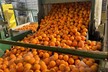
From January to 18 December 2025, Amur and Yakutia received over 4,600 tonnes of fresh mandarins and 1,300 tonnes of oranges from China. In November alone, imports surged to 800 t of mandarins and 150 t of oranges, all cleared for circulation after phytosanitary inspection.
During the same period, Yakutia also imported more than 4,300 t of plant products from Kazakhstan, including onions (4,300 t), garlic (8 t), strawberries (54 kg), raspberries (36 kg), currants (95 kg), sea buckthorn (23 kg), and gooseberries (14 kg). All consignments met quarantine requirements.
In Kaliningrad, over 700 t of mandarins and clementines were imported from Turkey (524 t), South Africa (127 t), Egypt (41 t), and Morocco (11 t). Laboratory checks confirmed the absence of quarantine pests.
In Omsk, an 11 t shipment of mandarins from China via Kazakhstan was found to carry the black citrus whitefly, which was eliminated through fumigation.
From November to mid-December, Sverdlovsk Oblast received over 3,000 t of mandarins from China (2,000 t) and Turkey (1,100 t). All shipments were inspected and cleared.
At the Russia–Kazakhstan border, shipments of cabbage, onions, and pomegranates from Kyrgyzstan, Kazakhstan, and Afghanistan totaling 109 t were returned due to invalid certificates and missing labeling.
Additionally, high-risk products, including mandarins, grapes, tomatoes, cucumbers, and pomegranates, were transported to Moscow, Sverdlovsk, Perm, Chelyabinsk, and Kurgan, with three trucks carrying 36 t of grapes returned for quarantine violations.
From the start of the year, Amur Oblast tested 2,700 t of fresh cucumbers from China with no quarantine pests detected. A 16.2 t shipment of peppers in Moscow was found to carry the western flower thrips and was treated before release.
Source: fsvps.gov.ru