At the beginning of December, the walnut sector entered a strategic period. Traditionally, the end-of-year festivities are accompanied by a second round of supplies to supermarkets. It is a key moment to raise the profile of this seasonal product, which often faces competition from imports. "At the beginning of December, we restock. It is a time when distributors come back to us to put the product back in the spotlight, because walnuts play an important role in holiday dishes," explains Nathalie Gaillard, coordinator of the Grenoble Walnut Interprofessional Committee (CING).
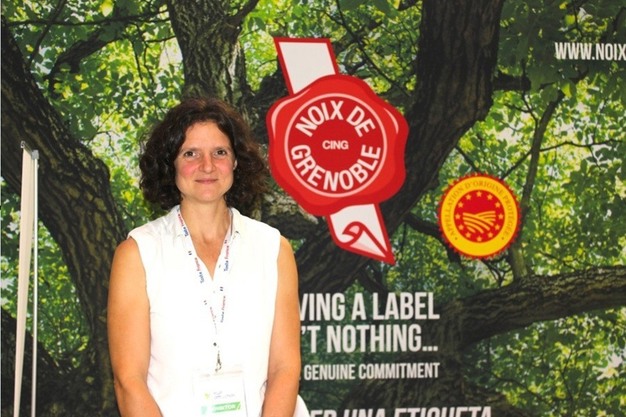 © CING Noix de Grenoble
A seasonal, gourmet product, much used during the festive season
From pastries to caramelized confections, walnuts are one of the most sought-after ingredients during the winter period. "It is a product that features heavily in Christmas recipes, and consumers associate it with both indulgence and health," explains Nathalie Gaillard.
This consumption period also corresponds perfectly to the product's seasonal nature. Harvested in October, the walnuts arrive on the market in their optimum state of freshness, an argument that carries weight when compared with more distant origins. "We are in the heart of the season. It therefore makes sense to offer Grenoble walnuts in December, when they are in great demand in the culinary world."
A French origin capable of supplying the market on a large scale
In addition to the consistency of the calendar, there is no shortage of French produce. "French production can largely supply the domestic market, especially as 60-70% of the volumes are exported. Domestic consumption is not enough to absorb everything we produce," explains the coordinator.
With the festive season approaching, the issue is not availability but visibility. Imported walnuts - often sold in the form of processed kernels - sometimes have a stronger presence on the shelves, even though their origin is not always identifiable. "For processed products, the country of origin is not compulsory, and therefore difficult for consumers to identify. Conversely, Grenoble walnuts provide a guarantee: it is clear where they come from and how they are produced."
Traceability and preservation: Two differentiating advantages
Walnuts in shell have a natural advantage: they keep remarkably well. "As long as they remain in their shell, the kernels do not oxidize. We do not yet have the cold storage constraints imposed by our specifications to ensure the optimum preservation of kernels without any deterioration in quality," explains Nathalie Gaillard.
This stability helps to preserve the specific characteristics of the Grenoble walnut varieties, renowned for their balance between sweetness and slight bitterness. It is a combination that is much sought-after in pastry-making. It therefore makes all the more sense to promote it during the festive season.
Communication campaign that has sparked genuine interest
To accompany the season, CING strengthened its presence via digital campaigns on social networks, generating high visibility. "The content worked very well, especially the videos showing the work of the producers. Consumers need to understand what is on their plates, and this kind of transparency generates a lot of discussion," observes the coordinator.
While the direct impact on purchases remains difficult to measure, the public's interest confirms that there is a demand for identified products, linked to a specific terroir and origin.
An opportunity for supermarkets to put origin back at the center of the shelf
At a time when international competition sometimes blurs the distinction between products of origin, the festive season represents an ideal opportunity to promote Grenoble walnuts. A product in season, a recent harvest, the availability of supply, a clear indication of origin: these are just some of the arguments that can rebalance consumers' choices when it comes to filling their shopping baskets.
"The challenge is simple," explains Nathalie Gaillard. "The French origin meets a clear expectation, and we have a product capable of holding its own. It is now a question of making it visible at the right time."
For more information:
Nathalie Gaillard
CING
[email protected]
www.aoc-noixdegrenoble.com