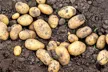
A new late blight-resistant potato variety, CIP-Asiryq, developed in Peru for Andean conditions, is expected to be introduced in East Africa within the coming years. The variety was created by the International Potato Centre (CIP) and partners using wild potato relatives with natural resistance. It will be shared with breeding programs under the International Treaty for Plant Genetic Resources for Food and Agriculture, including those in Kenya, where potato is the second most important staple.
A representative from Crop Trust told Down To Earth that researcher Thiago Mendes, part of the development team and an East African plant breeding network, is working with Kenyan collaborators to guide local adaptation. The project will be implemented in Kenya, Rwanda, Uganda, Egypt, Algeria, South Africa, and Malawi.
Late blight remains a major production constraint in the region. The National Potato Council of Kenya reports that yield losses can reach 80 per cent. Across the East African highlands, about 2.5 million smallholder growers depend on potato as a cash and subsistence crop. In Kenya and Uganda, more than 1 million farmers cultivate potatoes, with losses from late blight reaching up to 70 per cent. In Uganda alone, CIP estimates annual losses above US$129 million.
CIP-Asiryq, derived from the wild species Solanum cajamarquense conserved in the CIP genebank, has the potential to reduce global farmer losses by US$3–10 billion each year. The variety requires fewer fungicide sprays, cooks 25 per cent faster than Peru's Yungay variety, and, according to CIP, "shows strong potential for both table and processing markets."
The development of the variety began during the Crop Wild Relatives project and was made possible through the Biodiversity for Opportunities, Livelihoods and Development (BOLD) program, both coordinated by Crop Trust with support from the government of Norway.
Mendes said CIP-Asiryq may also offer a solution for growers in other regions facing late blight pressure. He noted the variety's versatility, with farmers in Peru's Huanuco region using it for both fresh consumption and processing. Raul Canto, coordinator of the agrobiodiversity area of the Yanapai Group, said, "This potato variety was developed for fresh consumption, not specifically for processing, but some producers do grow for the processing industry." He added that the flexibility may offer income opportunities for small producers and meet demand from processing companies.
Source: DownToEarth