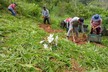
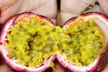
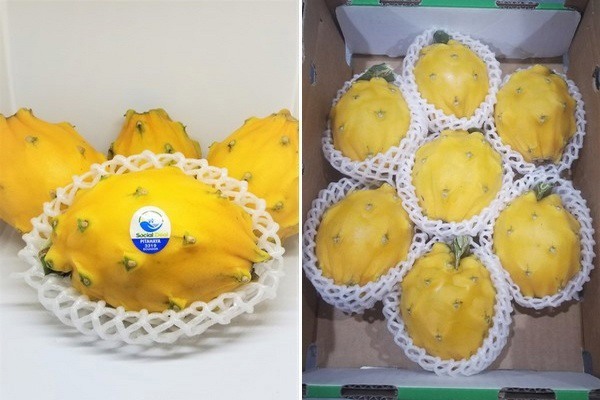
Pitahaya is one of Ecuador's most representative products in international markets. Isidro Andrés Romero, the commercial director of Honey Fruits, highlighted the country's role in producing red, white, and yellow pulp varieties, with the latter being recognized for their sweetness and quality.
"The yellow Palora variety is exclusive to Ecuador and has sugar levels exceeding 20 degrees Brix, making it highly valued. The company uses organic certifications for the red varieties and mainly produces in the eastern part of the country, where the climate enhances the fruit's flavor and texture," Romero stated.
 © Honey Fruits
Pitahaya production is seasonal, peaking from January to March and again in December. However, the company uses technologies such as greenhouses and artificial lighting to support year-round production. We aim to minimize climate effects and better align with market windows," he said.
The United States is Honey Fruits' main market, followed by Europe (Spain and the Netherlands). Competition in Asia is tougher due to local production in countries like Vietnam.
"Pitahaya prices are very volatile, particularly for the yellow variety, which experiences more stability due to lower global supply. The price per kilogram can fall below one dollar during high production periods and rise above two dollars when supply is scarce," Romero stated.
"The increase in crop production across various regions worldwide has also put pressure on prices. However, Ecuador maintains a competitive edge because of the quality of its fruit and its renowned Palora variety," he stated.
In addition to pitahaya, Honey Fruits has also invested in blueberries. The company now has 40 hectares of this crop, primarily cultivating the Atlas and Sequoia varieties in the Ecuadorian highlands. "The thermal contrast in the area means that our blueberries are very sweet, with levels of 16 degrees Brix and without the typical acidity of other regions," he said.
Unlike other producing countries, Ecuador can produce blueberries year-round, allowing it to plan harvests to avoid direct competition with Peru, the world's leading exporter. Currently, "Honey Fruits exports mainly to Singapore and China, where prices are stable, around 10 dollars per box, and it aims to double its volume by 2026, reaching about 600 tons, 30% of which will be destined for export," he stressed.
The executive warns that the sector's main challenges are internal competition from new producers and U.S. tariffs, which have increased from 10% to 15% and are affecting competitiveness.
"Ecuador's diverse climate gives it tremendous agricultural potential, and our goal is to demonstrate the quality and value of its fruits to the world," Romero concluded.
 For more information:
Andrés Romero
Honey Fruits
Ecuador
Email: [email protected]