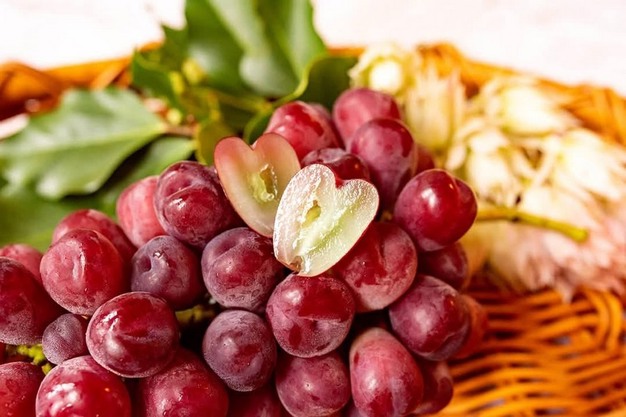
Heart-shaped grapes imported from China are currently selling strongly across Vietnamese markets and online platforms, priced at about US$11.40 per kilogram (VND300,000). The fruit has been arriving in Vietnam since late September and is typically sold in bunches weighing two to three kilograms.
Nguyen Thanh Truc, owner of a fruit shop in Ho Chi Minh City's Binh Thanh Ward, reported selling more than 100 bunches in the past two weeks, 20% more than the same period last year. "These grapes are priced the same as U.S. ones but look juicier and taste sweeter, and so customers love them," she said.
 © Facebook
At the wholesale level, Hoang Thu, a fruit wholesaler in Bay Hien Ward, said the grapes are among the top-selling items this season. She offers a wholesale rate of about US$7.20 per kilogram (VND190,000) for orders exceeding 20 bunches. Supply of these grapes, along with Shine Muscat and other Chinese fruits such as cherries, has been strong this year.
The heart-shaped variety, originally developed in Japan as a hybrid between the Shine Muscat and European Pareto grapes, is known locally as "my heart." It was previously imported only from Japan and sold at much higher prices, ranging between US$57 and US$95 per kilogram (VND1.5–2.5 million). However, China has been able to mass-produce the variety at a lower cost over the past two years.
A representative from Ho Chi Minh City's Thu Duc Agricultural Wholesale Market said imports of the fruit only began this year but have grown rapidly. According to Vietnam's General Department of Customs, the country imported more than US$669 million worth of fruits and vegetables from China in the first nine months of 2025. Grapes made up the largest share, with the heart-shaped variety being the most expensive. Other Chinese grapes, such as red and green table grapes, are priced between US$1.90 and US$3 per kilogram (VND50,000–80,000), while Shine Muscat grapes range from US$3 to US$5.70 per kilogram (VND80,000–150,000).
Dang Phuc Nguyen, general secretary of the Vietnam Fruits and Vegetables Association, said China has expanded access to premium fruit varieties through high-tech farming, though "their quality might admittedly not match the original."
Vietnam currently cultivates several thousand hectares of grapes, primarily in Ninh Thuan Province, which has between 1,000 and 1,200 hectares under production. Newer high-yield varieties require investments in greenhouses, drip irrigation, and cold storage, increasing costs compared to imported Chinese fruit.
The Plant Protection Department said all imported fruit shipments undergo phytosanitary inspection, with updated sampling and testing procedures in place to ensure food safety.
Source: VNExpress