Since early October, Shandong Province, China, has experienced more than ten days of continuous autumn rainfall, affecting apple quality and market prices. The prolonged wet weather resulted from a northward shift of the subtropical high and sustained interaction between cold and warm air masses.
 © Onedayone Group
Typically, the subtropical high retreats south of the Yangtze River by September. This year, its delayed movement and stronger-than-usual intensity caused cold northern air to meet warm, humid southern air over Shandong, producing extended rainfall that lasted until the high-pressure system finally moved south on October 18.
Data from the Shandong Climate Center show that the province received an average of 110.6 mm of rain in early October, nearly nine times higher than the historical average and the highest level recorded since 1951.
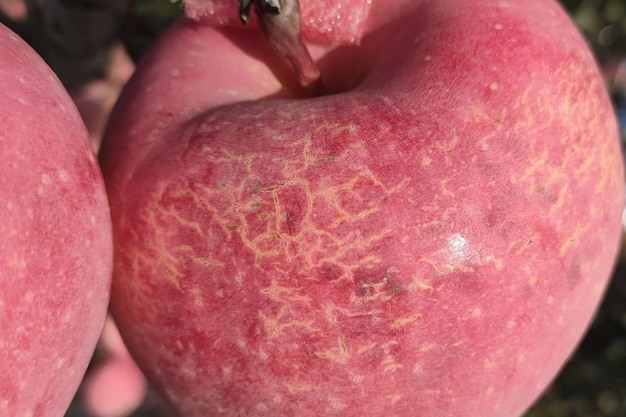
As one of China's main apple-producing regions, Shandong relies on stable weather conditions in October for bag removal and fruit coloration. The continuous rain disrupted this process, making it difficult for apples to color evenly or on schedule. Excessive moisture also caused some fruits to swell and crack, increasing the risk of rot and mold. In areas where soil remained saturated, poor drainage raised the likelihood of root rot, which could affect next year's yields.
 © Onedayone Group
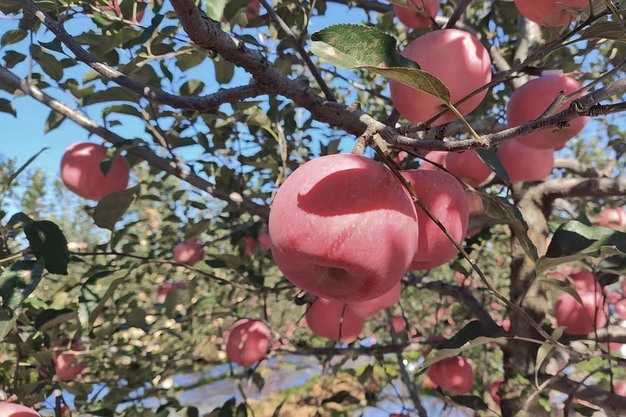
Although some growers attempted to mitigate the damage through drainage improvements and reflective film to enhance coloring, wet conditions still led to water cracking and reduced sugar accumulation. Industry estimates suggest that overall yields could decline by around 20%. The share of medium- and lower-grade fruit has increased, while high-quality apples remain limited. As harvesting continues, competition is expected to intensify in the lower-quality segment, widening the price gap with premium fruit.
Growers are now focused on managing post-harvest disease control and orchard recovery. Pest management and targeted fertilization are being applied to protect trees and prepare for the next production cycle.
 © Onedayone GroupFor more information:
Maggie Peng
Onedayone Group
Tel: +86 18717865462
Email: [email protected]
www.onedayonegroup.com