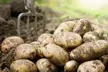
According to Ukrainian potato producers, annual production ranges between 9 and 11 million tonnes. Yet, despite impressive volumes, most of this production serves the domestic market, as export opportunities remain limited. Without international buyers, most farms focus on grains and oilseeds, leaving potato production as a side activity.
Ukrainian producers cannot export potatoes to the EU because the country lacks phytosanitary zones free from quarantine organisms. Certification requires years of monitoring, and this process is ongoing. Potential markets outside the EU, Moldova, the Balkans, or Central Asia, are too small to drive industry growth.
The Ukrainian potato market fluctuates in classic "boom-and-bust" cycles. A year of high prices triggers overproduction and price collapse the next season. Imports from EU states further suppress prices, as subsidized European potatoes often arrive cheaper than local produce. Many farmers exit the sector due to low margins and unstable demand.
Average yields in industrial farms reach 35–45 t/ha, compared to 60–70 t/ha in Western Europe. The gap comes from less irrigation, uneven rainfall, and higher production costs. Still, local logistics can favor Ukrainian producers over imported potatoes, especially near urban centers.
Low-quality seed material remains a bottleneck. Ukrainian farmers rely heavily on imported seed from the Netherlands, Germany, and France, as local breeding is underdeveloped. Certified domestic seed is scarce, and state support for seed farming is minimal. Establishing clean land rotations is economically unfeasible for most farmers, limiting national seed development.
A modern potato storage facility costs about $1 million for 2,000 tons, so few farms can afford one. Without storage, producers must sell immediately after harvest, losing value. Those who invest in storage can sell off-season and maintain quality, a key to competitiveness and potential future export.
Ukraine's potato sector won't see a quick recovery or EU access soon. Growth depends on quality seed production, storage infrastructure, and gradual professionalization, as household growers exit the market and industrial farms evolve to replace them.
Source: latifundist.com