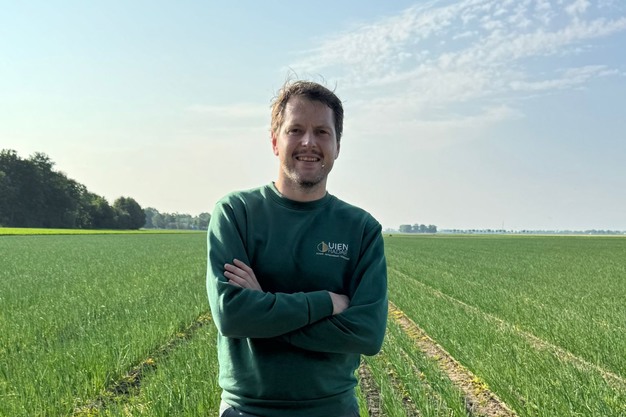
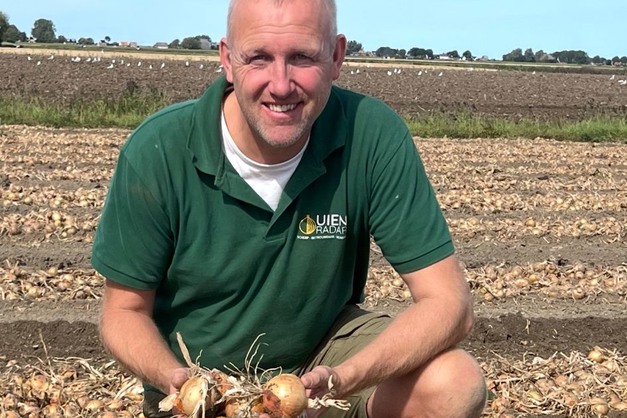
Sending out feelers in the market. That is how Dutch brokerage firm Uienradar's Machiel Boons likes describing that company's role. "We're constantly studying market developments. Armed with that knowledge, we inform growers, sometimes digitally, but just as often in person at their farms. Transparency must be at the heart of any purchase agreement, and we love helping with that," he says.
 © Uienradar
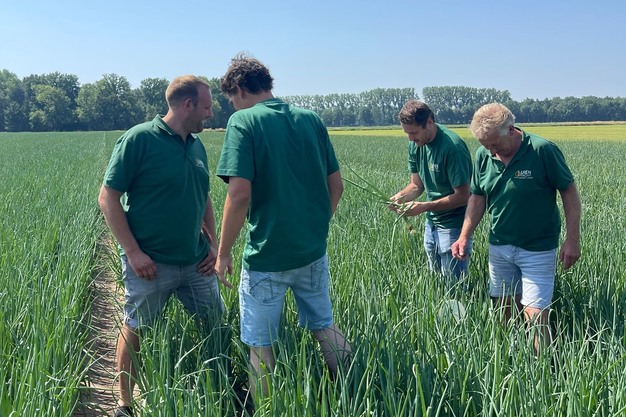
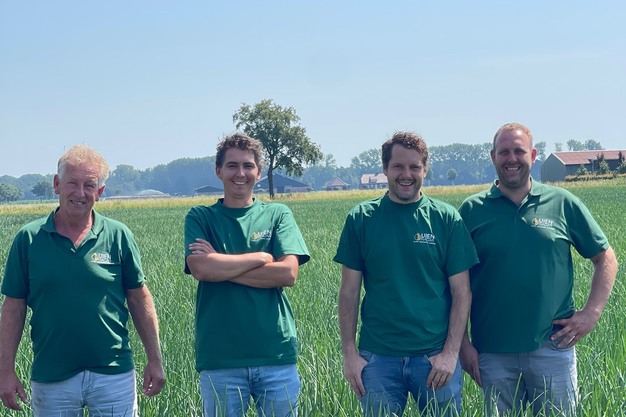
Four regional purchasing partners in the north and east of the Netherlands keep their fingers on the pulse of onion growers while Machiel maintains contact with the packers and traders. "From North Holland to Groningen, and via the east all the way to South Limburg, that's our working area. We work with a few growers in South Holland and Zeeland, but most of our customers are from the southwest, so those regions don't add much."
 © Uienradar
Uienradar uses WhatsApp to keep onion growers directly informed of what's going on. "I send market information, but also requests when we're looking for a specific size or color. And during the growing season, I provide updates on how the onions are doing," says Machiel. The combination of digital information and personal contact ensures growers remain well-informed.
 © Uienradar
The business works entirely on commission and buys nothing itself. That ensures complete transparency: Growers know what processors pay and vice versa. That openness is appreciated, especially when many traders trade on their own behalf and, so, conceal information.
As a middleman, Uienradar has a broad network and good market insight, and provides valuable information about supply, demand, and prices. Both small and large growers use their services. Although small parties sometimes require more effort, openness and market knowledge remain at the core of the company's business model.
 © Uienradar
Boons is mostly positive about this year's harvest and quality. "The early batches have already been weighed, with the tare weight for onions from sandy soils being lower than last year. They seem to be of good quality, though." That optimism, nonetheless, comes with several caveats. "The heavier soils have slightly more Fusarium than usual. That's, however, nothing compared to last year, which was a real bacteria year," he explains. "At the end of the season, moisture got into the open onion necks. When that happens, it's a disaster."
Heat wave was the tipping point
August's hot last week threw a spanner in the works. "Fearing sun damage, no one harvested onions that week. Those harvested afterward were too sharp and lost their leaves more quickly. That heat also halted growth in many plots. The earlier plots were not affected much, as those onions had already developed well, but the later batches experienced significant growth loss. Without that one week, the yields would probably have been even higher," Machiel concludes.
 For more information
Machiel Boons
Uienradar
Tel.: +31 (0)6 41669970
[email protected]
www.uienradar.com