The sweet potato market in Europe has seen influences from several producing countries, even outside of European production, says Tania Luz e Silva of Rush Group and Rush Farms fresh produce player: "There's been a rather interesting start of the sweet potato campaign in Egypt, where high demand and prices matched the quality observed. As such, the market initially seemed quite promising. However, the situation quickly changed, largely due to both the available volumes of Egyptian sweet potatoes in Europe, as well as local European production. There are increasingly more origins available, such as the Netherlands and Germany, which will become more common, thanks to climate change."
Silva emphasizes that Rush Group operates in several countries with local offices, meaning they can offer sweet potatoes from various origins, not just one origin. "Our specialization throughout the entire process has allowed us to stand out. Not only do we have our own teams in the various production regions we work with, helping to control product and sorting quality, as well as providing us with insights into volumes and campaign developments, but we also offer sweet potatoes with different flesh colors, such as purple, white, and orange, in both conventional and organic production. This allows us to sell to niches or for grand consumption; we can always provide."
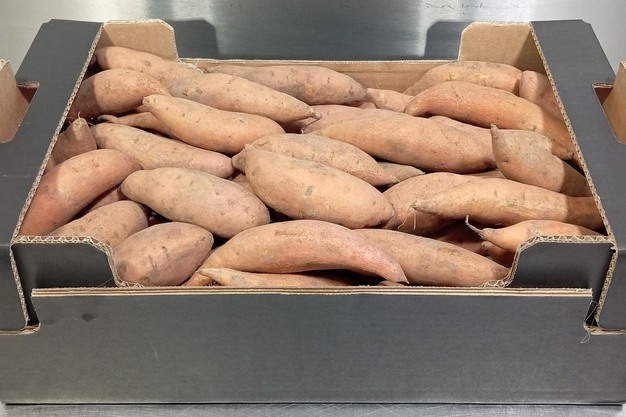 © Rush Farms Portugal
According to Silva, as time goes on, the good quality sweet potatoes will be harder to come by, which she thinks will give them an advantage in the long run: "We believe that demand will start to rise once the cold weather starts, and with the holidays approaching. As soon as we get deeper in the season, and quality starts to decrease, those who have the better quality sweet potatoes will be able to make a difference with their product, and prices for these better quality sweet potatoes will be the reward."
Managing production in several countries means there are different expectations for each of the origins, Silva explains. "In Egypt, for example, with strong domestic markets, prices and product quality, and investing in storage, it's expected to have more production next year. From Portugal and Spain, we see more specialization in harvesting, packing, and storage quality overall. And with our joint venture with a farmer in the USA, which has established itself for its quality, has been recognized for some years now, we can actually cover a year-round supply."
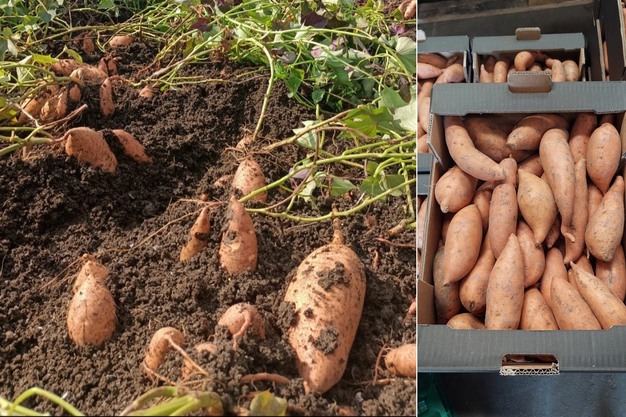 © Rush Farms Portugal
Having production in countries isn't what will put Rush Group and it's companies Rush Farms ahead of the competition, Silva states, it's the post-harvest operations they can offer that she feels will set them apart: "There are some markets that started to import directly from Egypt, like Eastern European countries, but the main issue is the to have a rigorous sorting operation, which the group prides itself in," she concludes.
For more information:
Tania Silva
Rush Farms
Email: [email protected]
www.rushgroup.co.uk