Since last week, demand in the mushroom market has started to rise again. "It was a quiet summer," explains Michel Lesage of Lesage Champignons. "In the summer, it's always a bit quieter. People are on holiday and, despite my disagreement, mushrooms are still too often seen as a winter product, so sales always dip. Fortunately, we're now on the eve of a busy autumn."
It's a trend the grower and trader sees continuing. "There are more peaks and troughs throughout the year. Summers are getting quieter, while winters are becoming busier," Michel explains. Why is this happening? "Hard to say, but it seems that people are buying much more impulsively. When the weather is nice, people barbecue, eat out, or go away on holiday. Eating habits are far less fixed than they used to be. Back then, people knew: 'On Wednesdays we eat this, Fridays that, and Sundays something else.' Now things are much more erratic, and mushrooms only come to mind when the days get darker."
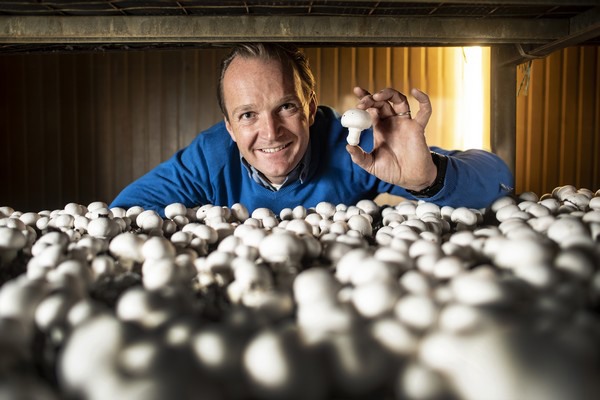
André Champignons
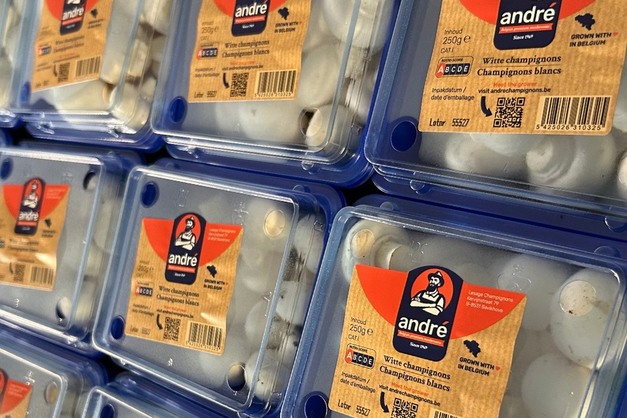
"You see that reflected in sales too," he continues. "People still associate mushrooms with winter. Besides, nobody likes standing in a hot kitchen when it's 25 degrees. It's up to us to adapt and respond to this changing consumption behaviour." One way the Harelbeke, Flanders-based company addresses this is with its André Champignons brand. "Through various channels, we try to inspire consumers to start cooking with mushrooms. Whether it's recipes for salads, appetisers, or mushrooms on the barbecue, it's such a versatile product. It works with meat or fish, hot or cold, raw or cooked. Too often, consumers still have the classic image of mushrooms in cream sauce with steak."
"We get a lot of great responses to this," Michel continues. "We communicate via Instagram, Facebook, our website, you name it. We also try to combine it with insights into cultivation, so people become more aware of where their food comes from. That way, we interactively reach younger consumers—young families, who are conscious of nutrition, health, and eating less meat. Mushrooms fit perfectly into that picture, so that's where we focus. People are often surprised by what's possible."
 © Lesage Champignons
Michel therefore sees that the approach is working. "Absolutely. We see some videos reaching hundreds of thousands of views. The other day, one video reached around 400,000 views in Flanders, and another achieved the same number in Wallonia. Suddenly, you've reached almost a million people with one message. You would never achieve that with flyers or leaflets." Do they also see this reflected in sales? "That's, of course, hard to measure, but our customers are very loyal. We're now working on a broader product range to increase our visibility on shelves, and, in addition, we want to run more targeted campaigns."
Busiest period of the year
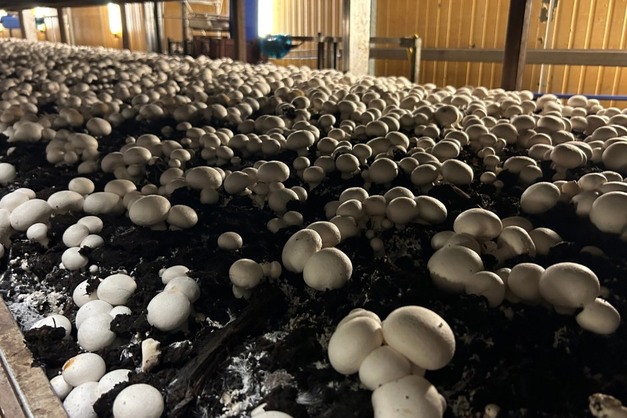
With summer ending and rainy days returning, the busiest period of the year is approaching for Lesage Champignons. "Yes, October, November, and December are traditionally our peak months. Other types of mushrooms, such as shiitake and oyster mushrooms, which we trade but don't grow ourselves, also get a big boost then. Their demand is even more sensitive to weather fluctuations. In summer, sales of these drop sharply. More so than white or chestnut mushrooms. But in winter, demand picks up again. Especially in the foodservice sector, they reappear on menus with game and autumn dishes."
 © Lesage Champignons
For now, Belgium remains the main market, but demand from surrounding markets is increasing. "We're getting more and more requests from abroad, without actively pursuing them. Particularly from neighbouring countries like France and Luxembourg, so we definitely want to focus on this where possible. Still, logistics remain a challenge. Mushrooms are fresh with a short shelf life. You can't fly them all over the world, so we only target markets we can supply within 24 hours, to guarantee optimum quality."
Automation
Challenges remain for the company as well. "Like everywhere else, finding good staff is a challenge for us. That's also why we are investing heavily in automation. We've already made great progress in packing, internal transport, and similar areas. But harvesting is a different story. Mushrooms are delicate. They're the only vegetables without a skin or protective layer, so they're easily damaged if harvested mechanically. That reduces shelf life. Moreover, the growing situation is variable, which makes it very complex. Sometimes, smaller mushrooms need to be removed to allow others to grow. Some grow taller than others. That still requires human eyes and fine motor skills. The technology just isn't there yet, and we won't take risks with it. We want to keep guaranteeing quality, because we deliver directly to consumers. Our brand is on the packaging, and we take that responsibility seriously. As long as the technology doesn't meet our quality standards, harvesting will remain by hand."
For more information:
Michel Lesage
Lesage Champignons  Kervijnstraat 79
8531 Harelbeke (Bavikhove), Belgium
+32 (0) 56 71 22 88
[email protected]
www.lesagechampignons.be