South Africa's agri-food trade with the European Union (EU) is showing signs of decline, despite the country remaining the EU's largest trading partner in Africa. Researchers from Stellenbosch University and Mendel University in Brno, Czech Republic, report that rising trade barriers and disputes are creating a more challenging export environment.
The study, published in Agrekon, analysed 20 years of trade data (1999–2019) using the Constant Market Share model to assess changes in South Africa's export performance. The researchers examined bulk commodities, processed intermediate goods, horticultural products, and consumer-ready goods. Citrus, grapes, wine, apples, pears, and avocados are the top five agri-food exports to the EU.
 © Stellenbosch University
Dr Melissa van der Merwe
Horticulture is the largest agri-food category exported to the EU, increasing from about 58% of exports in 1999 to over 65% in 2019, according to Eurostat data. Wine remains the leading consumer-ready good. Processed intermediate and horticultural products each account for around 15% of EU agri-food imports. Nearly half of EU agri-food imports go to Central Europe, while Northern and Southern EU countries each receive about 20%, and the Eastern EU has a smaller but growing share.
While overall exports to the EU have increased over the past two decades, the study notes that growth slowed after the global financial crisis. This is linked to both the recession's lingering effects and the rise of non-tariff barriers (NTMs). Eastern EU markets expanded rapidly after joining the EU in the early 2000s, but annual growth fell from 6.5% to 3.5% after the recession. Southern Europe experienced a similar slowdown, dropping from 6.3% to 2.6% growth per year. Central and Northern EU markets have been more stable but show signs of stagnation.
The researchers suggest that current trade agreements may no longer be sufficient to ensure long-term competitiveness. They recommend focusing on products with rising demand, especially horticultural exports, and targeting emerging Eastern EU markets.
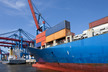
Investment in domestic infrastructure, including container ports and electricity supply, is seen as essential to lowering transaction costs and reducing uncertainty, helping South Africa compete with subsidised EU producers and other suppliers. Policymakers are encouraged to engage with EU counterparts to address NTMs, resolve disputes limiting market access, and help exporters adapt to strict regulations.
The study also advises exploring fast-growing markets outside the EU, such as BRICS countries, South Korea, Japan, and Vietnam, to diversify export destinations. Redirecting high-demand products to both EU and non-EU markets could help offset slowing growth in traditional markets.
Despite the challenges, the EU remains South Africa's most valuable trade partner, with trade generating a surplus and foreign investment, as well as supporting employment and technological development.
For more information:
Stellenbosch University
Tel: +27 82 353 9447
Email: [email protected]
www.sun.ac.za