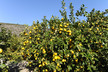
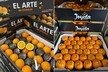
In Rio Grande do Sul, Brazil, fruit seller Evaldo Kipper has recorded his second encounter with a giant dekopon tangerine in three years. The most recent fruit weighed 894 grams, while the previous one reached 998 grams. Kipper noted that the average weight for the variety ranges from 400 to 650 grams.
The dekopon variety, a hybrid between tangerine and orange (Citrus reticulata Blanco x Citrus sinensis (L.) Osbeck x Citrus unshiu Marcow), was developed in Japan in 1972 and is mainly cultivated in Japan, South Korea, and China. In Brazil, production is concentrated in the Southeast and was introduced with Japanese immigration. Pilar do Sul, São Paulo, is a notable production area due to favorable growing conditions.
According to Luana Aparecida Castilho Maro of the Santa Catarina Agricultural Research and Rural Extension Corporation (Epagri), dekopon is characterized by thick, rough skin that peels easily, large seedless segments, a prominent peduncle, and juice volume making up about half its weight. The variety's higher acidity compared to other tangerines can affect marketability if harvested too early, but at full maturity, it offers a balance of sugar and acidity.
Kipper's oversized fruit was displayed in-store and featured in a video that went viral on social media, generating nearly 1 million views. He reported visits from customers from other cities and inquiries from as far as Paraná, Santa Catarina, and the Northeast. Some consumers requested shipment, which he declined.
Dekopon pricing in Rio Grande do Sul does not vary significantly from standard tangerines, selling at about US$0.91–US$1.09 per kilo, with seasonal fluctuations. Early in the harvest, prices in Kipper's shop were around US$0.73 per kilo. He has received reports of prices reaching about US$5.45 per kilo in other regions, which he attributes to transportation distances.
In cultivation, dekopon is propagated through budding or bud grafting, as it is seedless. Trees begin bearing fruit in their third year. Kipper noted that by the time his viral video was published, fruit sizes had already decreased, with the average weight returning to about 400 grams per unit.
Source: Abrafrutas