The potato sector is embracing technology to address its challenges, primarily the high cost of labor and the lack of generational replacement, in a scenario where profits fluctuate from one season to the next.
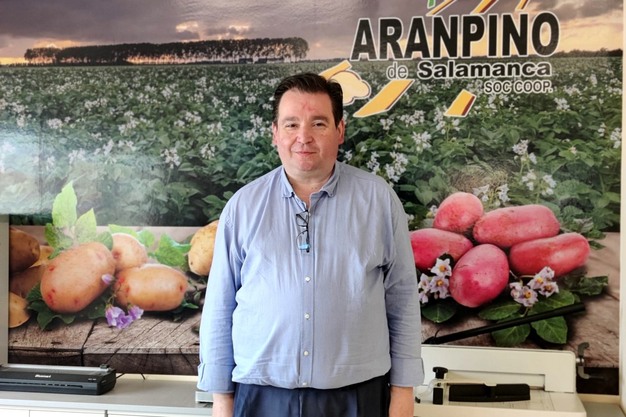
This year, "Salamanca's production increased and prices decreased. The season is ten days delayed because it rained a lot during sowing. However, there won't be a production gap because there are still potatoes from Seville, Cartagena, Valencia, France, and even Egypt. In years like this, it is complicated to maintain labor costs," stated José Blázquez, Manager of Aranpino de Salamanca S. COOP., a cooperative that produces 25 million kilos of potatoes on 500 hectares for the domestic market. They also produce wheat, rye, and corn for land rotation.
 © Aranpino
Technology revolutionizes agriculture
According to Blázquez, the lack of generational renewal is one of Spain's biggest challenges. However, he added, "The potato sector must first adapt to deal with production costs, including labor."
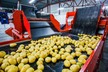
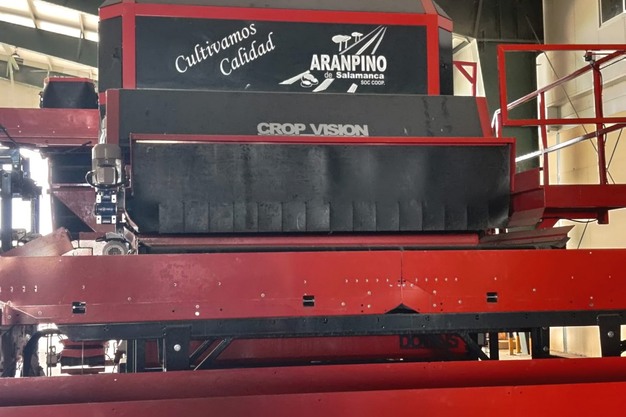
"There's a big discrepancy between costs and the activity because our work is irregular; one day we need 5 people, another day, 15. There are years, like this one, when prices are not high and labor costs can stand at €18/hour per worker. That's why we're relying on technology as much as we can. Now, we have a self-propelled harvester and a quality and caliber optical selector that can sort 60 tons per hour at the warehouse," he said.
Another issue is the lack of generational renewal, as most farmers are close to 65 years old. "They can handle the sowing and cultivation phases just fine, but harvesting is difficult for them. They like machines, which save them manual labor and allow them to move much faster," Blásquez said.
In November, the potato crop must be completely harvested due to the risk of frost. "We can achieve that in one day with machines. So it's not just about cost savings, it's about saving time and improving efficiency. A farmer who harvests with a combine harvester and selects by hand can harvest 200,000 kilos of potatoes in one long day under optimal conditions. Using the self-propelled harvester and optical selector, that same farmer can harvest up to 600,000 kilos. What do we gain? Time and convenience," Blázquez stressed.
Over the past ten years, agriculture has been one of the sectors that has progressed the most. "A fertilizer can cost between 300 and 500 euros. If you overfertilize, you lose money and you lack sustainability. Technology has considerably reduced these costs."
 © Aranpino
"We should be playing on a level playing field, but that's not the case"
As for the pressure from non-EU producers, Blázquez believes that "their labor is very cheap and they use products that have been banned here for a long time. This year, authorities banned metribuzin, a herbicide intended to control weeds, and we have no commercial alternative. Morocco and Egypt use these products without restrictions. We know European companies have gone to those countries to grow potatoes because it is profitable and easier to grow them there. We should be playing on a level playing field, but that's not the case."
"Spain has enough potatoes to supply the domestic market almost year-round, but we import a lot from France, as their product is affordable because it does not require irrigation. In Spain, we draw water from wells. Water extraction engines are powered by diesel, and diesel prices have increased from 40 cents per liter 10 years ago to 1 euro per liter now," Blázquez stated. In addition, Spanish farmers can't use certain anti-germinating agents, and they keep the potato at 8° C, "which means the potato has activity. French potatoes are stored at 2° C and remain dormant for longer."
This revolution in the sector is leading to an increase in final prices. "Low prices and quality do not go hand in hand. Consumers will have to educate themselves in this regard and identify the origin of what they buy, because the origin is not the same as the packaging," Blázquez stated.
For more information:
José Blázquez
Manager
Aranpino de Salamanca S. COOP.
Tel: +34 923 532 604
Email: [email protected]
www.aranpino.com