The fruit and vegetable sector is dealing with an increasing demand for more sustainable packaging solutions, a central issue that engages both packaging manufacturers and farms. A recent interview with Stefano Occhipinti Amato, owner of Gi.St.El. Plast S.r.l., a company specialising in the processing of films for horticulture and floriculture, and Vittorio Gona of Alba Bio, a company committed to biodynamic agriculture, offer an interesting insight into the evolution and current challenges of ecological packaging.
Gi.St.El. Plast operates in the field of processing Polypropylene, Polyethylene, PVC, and, in particular, biodegradable and compostable films, placing eco-sustainability at the centre of its vision. The cellulose film - also known under the NatureFlex name - particularly stands out among the proposed solutions. Stefano Occhipinti Amato explains that this technology has been available for about 20 years, and Alba Bio was among the first customers to use it as early as 2013. Vittorio Gona stressed the importance of this innovation for large retailers, who are always looking for solutions that offer a distinctive image.
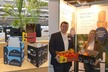
 © GI.ST.EL. PLAST S.R.L.Left to right: Stefano Occhipinti Amato and Vittorio Gona
Cellulose film is produced in the UK and is widely recognised in Europe and globally for its compostability and biodegradability certifications, including for home composting. Its raw material mainly derives from wood pulp sourced from responsibly managed forests.
Gi.St.El. Plast distributes this material by printing, macro-drilling, and cutting the reels for final packers, and holds the compostability certifications that allow the specific logos to be affixed. Stefano Occhipinti Amato points out that certified compostable inks are used, meaning that the film is suitable for food contact and home composting even after printing.
Despite the sustainability benefits, cellulose film poses significant challenges. Vittorio Gona reports that the cost of this material is significantly higher than that of traditional plastic. Stefano Occhipinti Amato highlights the difference between compostable and recyclable: "While plastic can only be recycled a few times before it loses its quality, compostable film is a more environmentally-friendly alternative, as it can be disposed of through home or industrial composting, returning value to nature and supporting the circular economy."
 © GI.ST.EL. PLAST S.R.L.Vittorio Gona and Stefano Occhipinti Amato
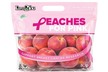
On the commercial front, cellulose film is used for various fruit and vegetable products, and especially for tomatoes, grapes, apricots, peaches, kiwis, etc. It is used for both the private label lines of big retailers and by companies wishing to follow a sustainable line, provided that the additional cost is recognised and covered by the end customers. Cellulose film currently accounts for around 30% of Gi.St.El. Plast, in terms of packaging solutions, with customers mainly in France, Belgium, Austria, Greece, Cyprus, and Spain. For Alba Bio, the use of this material accounts for around 20% of the total packaging.
The future of packaging in the fruit and vegetable sector is the subject of debate. While recognising the importance of sustainability, Vittorio Gona expresses a deep concern about costs: "Packaging often costs twice as much as the product. So it doesn't make sense to produce packaging and then think about how to dispose of it or reuse it."
Gona emphasises that the trend in the European Community is towards bulk products, although packaging remains essential when it comes to the organic sector to differentiate it from traditional products and prolong shelf-life, as it creates a barrier against oxygen and moisture, prevents the product's weight from reducing, prevents the product from degrading by keeping it fresher, and protects it from contamination, scratches and excessive handling, as well as slowing down ripening. "The final decision on the type of packaging is often left to big retailers," says the entrepreneur.
Stefano Occhipinti Amato concludes that the market is constantly evolving and requires constant attention to new technologies and customer demands. Despite the challenges, the raw material of cellulose films will not be subjected to price increases caused by US duties, ensuring a more stable cost. This offers a clearer perspective for operators wishing to invest in compostable packaging solutions.
For more information: Gi.St.El. Plast S.r.l.
Contrada Pescazze, 191
Santa Croce Camerina (RG) - Italy
+39 338 690 6488
+39 0932 915165
[email protected]
www.gistelplast.com
 Vittorio Gona
O.P. Coop. Alba Bio
Cda Ferranta, SN
97010 Marina di Ragusa (RG) - Italy
+39 0932 239003
[email protected]
www.gruppoalbabio.it