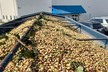
Several dried fruit exporters in Afghanistan report that pistachios have been harvested before reaching the "shool" stage over the past two years, negatively affecting the product's quality and the export process. The presence of nomads in pistachio forests, using the trees for fuel and livestock feed, has damaged these natural resources. Exporters urge the Taliban to create regulations to prevent further issues.
Exporters express concerns over early harvesting, noting that it now starts two months earlier than the traditional September 11 date, leading to reduced kernel yields. Ghulam Yahya Meshkwani indicated a yield decline from 400-500 grams per kilogram to only 100-150 grams due to early harvesting. He emphasized the role of nomads in cutting trees for fuel, further threatening the forests' sustainability.
Ahmad Shah Yarzada highlighted the decrease in market value resulting from the decline in quality. Pistachio kernels that used to fetch $33-34 per kilogram now sell for $22, with some reduced to $10 due to premature harvesting. He warned that without proper management, Afghan pistachios could lose both market and quality stature.
Nomad settlements within pistachio forests complicate efforts to control harvesting practices. Historically, individuals were removed from the forests before harvest time, a practice no longer in effect. Yarzada underscored a potential income loss of $50 million if timely harvesting is not restored, indicating the possible revenue if forests are managed for another 20 days.
Economic experts like Abdul Nasir Rishtia note that poverty and unemployment contribute to premature harvesting, as individuals seek immediate income. He advocates for awareness campaigns, along with technical and economic support, to encourage proper harvesting timing.
The Taliban governor's office in Badghis Province had announced a special committee to address early harvesting but has yet to implement practical measures. Natural pistachio forests in Badghis and Herat remain an essential income source, with international recognition for their quality.
The United Nations Food and Agriculture Organization (FAO) reported efforts to restore these forests by planting over 1.5 million pistachio saplings in Badghis between 2021 and 2023. Despite such efforts, Afghanistan's pistachio forests continue to face challenges from war, poverty, and unsustainable practices.
Source: 8 am Media