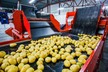
German early potatoes are reported to be predominantly high-yielding and of good quality. However, as there are still considerable quantities of imported produce on the market, price pressure on German produce is higher than in previous years, according to traders and market observers. The market appears to be oversupplied, which is why prices are continuing to fall.
Domestic early potatoes dominated the market. Both their availability and the range of varieties on offer expanded once again. This pushed imports, especially those from Cyprus, to the sidelines, and their market share melted away. Traders lowered their previous asking prices in various cases to accelerate business again at the end of the asparagus season. According to the German BLE, the presence of ware potatoes continued to decline. © BLELower Saxony:
Producer prices for early potatoes ranged from EUR 51.00 to EUR 53.00 per dt for waxy varieties. This is EUR 2 to 4 less than in the previous week. Further price reductions are to be expected.
Rhineland-Palatinate:
Early potatoes are now leading the potato market. Older produce is still available but is rapidly losing importance due to declining quality. Early potatoes from the Palatinate are now widely available, but imports continue to dominate the range. Demand is limited due to the warm summer weather. Together with good harvest yields, producer prices, therefore, remain under pressure, despite consumer prices in food retail of over EUR 2/kg in some cases.
North Rhine-Westphalia:
The first REKA listing for loose, firm-skinned early potatoes stands at EUR 45.00/100 kg for all cooking qualities. There is little news on the industrial potato market: French fry factories continue to focus on processing contract goods.
Baden-Württemberg:
Current quotations for loose regional produce have fallen compared with the previous week, from EUR 57/100 kg to EUR 47/100 kg for primarily waxy potatoes and from EUR 59/100 kg to EUR 57/100 kg for waxy potatoes. "All in all, supply currently exceeds demand," a potato wholesaler at the Stuttgart wholesale market said. "Given that the early potato season is starting early this year, there is slightly more competition than usual from imported produce, for example from Egypt and Spain. At the same time, customers are somewhat more cautious in their purchasing."
Schleswig-Holstein:
Wholesale prices for early potatoes continue to fall. The first loads of early potatoes from the southern federal states are arriving at local wholesalers. Local farms are also harvesting field crops for direct sale. High yields and good quality are being reported. As older produce and imports are still supplementing the supply, price pressure is higher than in previous years at this time of year. Price pressure is also coming from the supraregional industrial potato sector. Here, it is almost impossible to sell freeloads. Rain is currently needed again for the later potato stocks. There are no more water reserves in the upper soil layers.
Saxony/Saxony-Anhalt:
In Saxony, there have been no significant price changes for stored potatoes compared to the previous week. Compared to last year, prices for fresh, chilled, and processed potatoes fell (-13.9%).
Mecklenburg-Western Pomerania:
"The first regional early potatoes taste wonderful, but they don't keep very long," says Steffen Kantwill from Kartoffelmarkt Sülte. "We are very satisfied with the harvest. The potatoes are nice and large, and there are plenty of them per plant," sums up field manager Erik Steinhauer. Retailers are now also being supplied – Norma and Edeka, among others, are adding fresh tubers from the region to their product range.
Bavaria:
The planthopper (Petanstiridius leporinus) or more precisely the two bacterial diseases SBR and Stolbur transmitted by this insect, arrived in Bavaria about two years ago and has been causing increasingly serious damage to sugar beets, potatoes, onions, and many other crops and vegetables ever since. Potato farmers in particular fear total crop failure in the future.