CABI, in collaboration with Chile's Agricultural Research Institute (INIA) and the Croda Foundation, has launched a three-year project to promote sustainable potato farming among smallholder farmers. The initiative aims to support 300 farmers in reducing their reliance on chemical pesticides by introducing nature-based biological alternatives, including both existing and newly developed biopesticides.
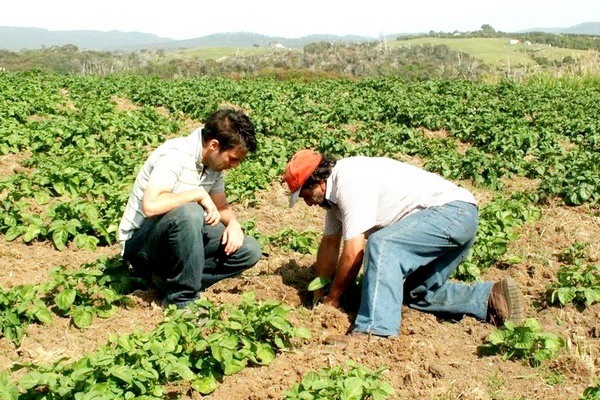
As part of the project, a technical visit was held on Chiloé Island to review progress made in the first year. So far, efforts have reached 160 farmers, focusing on training both farmers and technicians in the application of bioproducts, good agricultural practices, and the use of nature-based pest control solutions.
 © CABI
Attendees included Dr. Yelitza Colmenarez, CABI's Centre Director in Brazil; Rommel Moseley, Executive Director of the Croda Foundation; Jean Franco Castro, INIA project coordinator in Chile; Maria Teresa Pino from INIA's International Affairs Division; Manuel Muñoz David, Director of INIA Remehue; Sub-Director Carlos Salas; and Senior Researcher Ivette Acuña.
CABI's contribution includes sharing science-based knowledge on crop health to help smallholder farmers grow more and lose less, thereby increasing incomes, improving livelihoods, and protecting fragile ecosystems.
Potatoes, consumed by over one billion people worldwide, play a critical role in global food security and employment, especially in rural and urban communities. Originally from the Andean highlands and a staple crop of the Inca civilization, potatoes are now cultivated globally. In Chile, production is concentrated in the central-south zone, covering more than 35,000 hectares, with the Los Lagos region, and especially Isla Grande de Chiloé, leading cultivation. This area is known for preserving over 250 potato varieties, many of which are considered heritage species.
However, traditional farming systems in Chile are under increasing threat. Dr. Colmenarez explained that climate change, including irregular rainfall, prolonged droughts, and extreme weather, is reducing crop yields and increasing pest and disease pressures. Smallholder farmers, often working on marginal land and relying on ancestral knowledge, are especially vulnerable due to limited access to modern irrigation systems, crop insurance, or climate-resilient seeds.
Dr. Colmenarez emphasized the importance of supporting farmers in adopting natural-based solutions to sustainably manage crop threats. In addition to field activities, institutional meetings were held with INIA General Director Carlos Furche, Research Director Christian Alfaro, and National Deputy Director of Community Engagement and Technology Transfer Germán Holmberg Fuenzalida to strengthen collaboration.
The partnership underscores the potato's strategic role in food security. Potatoes yield more food per hectare than most staples, require less water than rice or wheat, and thrive in marginal soils, making them essential for communities at risk of food shortages. The project aims to improve Chile's phytosanitary conditions in the potato value chain, enhancing both farmer livelihoods and national food security.
 For more information:
Wayne Coles
CABI
Tel: +44 (0)1491 829395
Email: [email protected]
www.blog.cabi.org