Blueberries continue to enjoy strong momentum in European and other high-income markets. While seasonal gluts can sometimes lead to oversupply, Georgia is unlikely to feel the pinch. With a harvest window from mid-May to mid-July—delayed slightly this year due to weather—the country is well placed to sidestep peak market congestion.
Commercial blueberry cultivation in Georgia began relatively recently, with the first plantings in the western part of the country dating back to 2011. According to the Georgian Farmers' Association (GFA), around 6,000 tonnes were harvested last year from over 3,000 hectares. Government statistics from Geostat show that 4,564 tonnes were exported—mainly to Russia, but also to Germany, Poland, the UAE, and other markets. As more plantations reach full maturity, harvests are expected to grow to 15,000 tonnes or more in the coming years.
A growing market
That growth aligns well with opportunities in Europe, where average per capita consumption in 2023 stood at 0.7 kg, leaving plenty of room for expansion compared to Canada (1.2 kg) and the US (2.9 kg), according to the IBO Summit 2023. Optimism stems not just from rising demand, but also from Georgia's strategic harvest window.
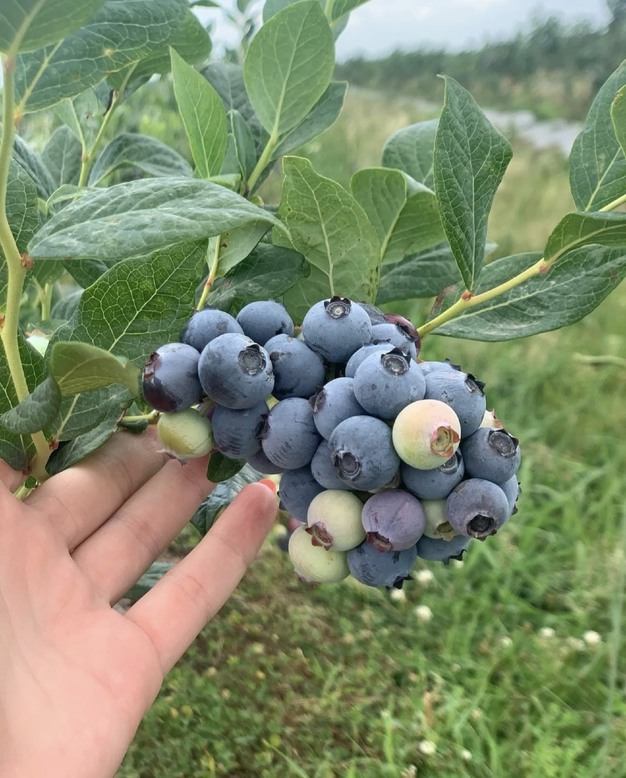 © Colibri Ltd.
With production running from mid-May to mid-July, Georgia avoids direct competition with Spain (57,670 tonnes in 2023) and Morocco (48,000 tonnes exported to Europe), whose seasons typically end by late May. It also gets ahead of major producers like Poland (61,900 tonnes) and Germany (15,320 tonnes), whose volumes only ramp up later in the summer. That said, competition still exists during this period, primarily from Serbia (53,010 tonnes), along with Portugal (19,050 tonnes) and the Netherlands (7,780 tonnes), based on Eurostat figures.
While many Georgian farms remain small-scale—less than one hectare—there are already over 50 growers managing plots larger than 10 hectares. Several large-scale projects are also in development. One of the medium-sized producers is Colibri, operated by father Giorgi and daughter Ana Inashvili near Kutaisi, Georgia's second-largest city. The family grows blueberries on 17 hectares in open fields and another 3 hectares in pots.
A passion for blueberries
Colibri didn't grow out of a traditional farming background. Quite the opposite: Ana's father had no experience in horticulture when he decided to start a blueberry farm. "He just loves good food and being in nature," Ana explains. "He tasted blueberries and thought: why not grow them ourselves right here?"
 © FreshPlaza
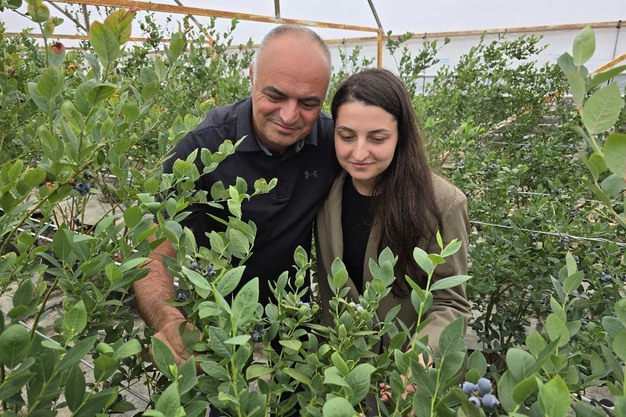
Ana Inashvili and her father, Giorgi, inspect the blueberry crop in early June
A number of government programs helped turn that spontaneous idea into a reality. Through the "Plant the Future" initiative, Georgia's Ministry of Agriculture allocated over 53 million GEL (around €17 million) in subsidies to support more than 2,800 hectares of blueberry cultivation in regions such as Guria, Samegrelo, Adjara, and Imereti. USAID also played a long-term role in helping the young sector take root. "The opportunities were there for the taking," says Ana.
European expertise, French plants
Determined to get it right, Ana's father traveled to the Netherlands to study modern cultivation techniques, visited agricultural trade fairs across Europe, and even conducted a soil analysis on a plot next to an existing GEO Organics plantation. He went on to purchase 20 hectares of land and placed his first order for blueberry plants from France.
 © FreshPlaza
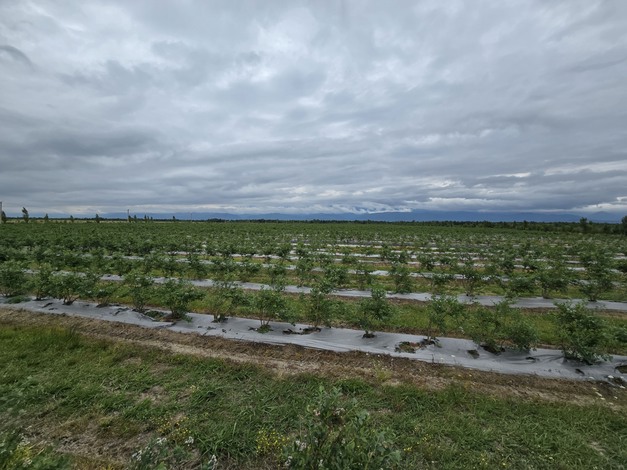
Colibri Ltd. grows blueberries on 17 hectares in open fields and another 3 hectares in pots
Today, the farm grows four varieties—Colibri, New Hanover, Star, and Duke—early and late producers that allow for staggered harvesting throughout June. "If the weather cooperates, we start picking in late May. But this year was cold and wet, so we're running at least a week behind," Ana notes. "Our potted plants usually give us a ten-day head start, though."
Water from the mountains
One of the major challenges for Georgian blueberry growers is the climate. Storms, rain during pollination, and unexpected cold snaps can all impact yields. But one thing they don't lack is water. Colibri draws from its own reservoir, supplied by meltwater from the Caucasus Mountains via the Rioni River, which runs through Kutaisi. All berries are hand-picked to ensure top quality and avoid damaging the delicate clusters. "We can harvest up to 8 tonnes per hectare, depending on the variety and the season," says Ana.
Russia and beyond
For now, most of Colibri's blueberries are sold to Russia. "Buyers come directly to the farm to pick up the fruit—even before it's sorted," Ana explains. Russia grows very few blueberries itself, which means Georgian growers face little competition there. Prices are often higher than in the EU, but it remains an unpredictable market. What if the border closes tomorrow?
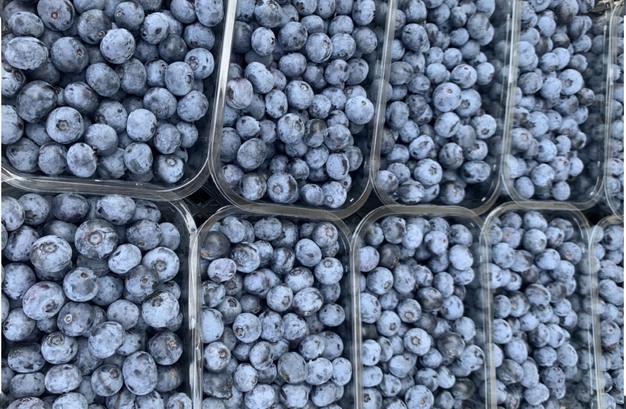 © Colibri Ltd
That's why Colibri—and many other Georgian producers—are working on a Plan B. Shipments have already reached the United Arab Emirates, and discussions are underway to open up new markets in India, Hong Kong, and Singapore. The EU is also becoming increasingly attractive. "This year, EU export prices could exceed those in Russia," said Tornike Pajavidze, chairman of the Georgian Blueberry Growers' Association, in a recent interview.
Looking ahead
Exporting to the EU requires certification. "We chose GlobalGAP on purpose," Ana says. "It's not needed for Russia, but it pushes us to maintain high standards—and it opens the door to Europe." At the same time, the domestic market remains a long-term option. Local consumption is still in its infancy, and major promotional efforts are needed to raise awareness of this blue superfruit among Georgians.
Still, Ana remains optimistic. "The sector is young, but moving fast. At Colibri, we're already planning to expand within two years. Demand is growing—and so are we."
For more information:
Ana Inashvili
Colibri Ltd.
Sayulia village, Tskhaltubo (Georgia)
Tel.: +995 598 444 474
[email protected]