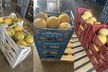
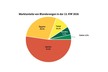
Apples remain one of the most traditional fruit crops in Ukraine, yet the market has become highly unpredictable. In recent years, growers have seen dramatic shifts, from oversupply and falling prices to shortages and increased demand. Some producers are turning to processing apples of lower quality to add value.
Ukraine supports orchard development through a grant program launched in July 2022. As of December 2024, 254 farms had received UAH 1.18 billion in funding. In 2024 alone, UAH 477.2 million was granted to 112 producers, primarily for planting orchards and berry fields.
Over the past two years, 3,500 hectares of new orchards were planted. In 2023, apple orchards covered 82,500 hectares, with 75,600 hectares productive. Apples made up 45% of all fruit and berry plantings and over 87% of pome fruit crops.
Total production in 2023 reached about 1.17 million tonnes, up 4% from 2022. Early 2024 data suggests even higher yields, up by 15–20%. Organic production is also expanding, with both domestic and export demand growing.
The 2024 season brought serious challenges, mainly from extreme weather. In the Dnipropetrovsk region, Stanislav Lebidkin of "Intepp" lost half his crop to frost, while heat and drought added to the damage. Still, high prices, even for processing apples, kept the season profitable.
In the Chernivtsi region, Igor Todosiychuk of "Prima" saw 30% of his 40-hectare crop damaged by hail and sunburn. Nevertheless, strong prices and reduced competition helped offset the losses. He noted renewed interest in the Simirenko variety, low in sugar and suitable for diabetics.
Mykola Ilashchuk, also from Chernivtsi, faced similar weather issues and labor shortages on his 6-hectare farm but still reported a profit. However, he added that when converted to USD, the returns were not as encouraging.
The processing sector was key in stabilizing the apple market in the 2024/2025 season. According to Vladyslav Makarenko, co-owner of the "Makosad" farm in Chernivtsi, a continued global shortage of apple concentrate could help avoid a crisis in Ukrainian horticulture.
"If apple concentrate prices stay above production cost, farms won't go bankrupt," he said in an interview.
Makarenko said high juice prices led growers to send even quality apples to processing. "We didn't expect to profit from damaged apples, but sold them for juice at fresh-market prices," he explained.
According to Vasyl Bondarovskyi from Biochem Agro, climate change is also affecting pest and disease control. Warmer winters no longer suppress pests, and hotter summers reduce pesticide effectiveness.
Source: techhorticulture.com / agrotimes.ua