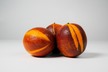
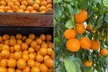
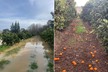
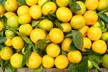
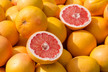
The organic clementine and mandarin season is currently in the transition period between the first and the second part of the campaign. Almost all of the Clemenules has already been marketed, as the production has dropped by more than 30%, and the same can be said of its successor, the Clemenvilla, whose supply has been reduced due to the impact of Alternaria. From now on, the harvest will start for varieties such as the Nadorcott, Tango, Orri or Murcott, among others, whose prices are higher than last season.
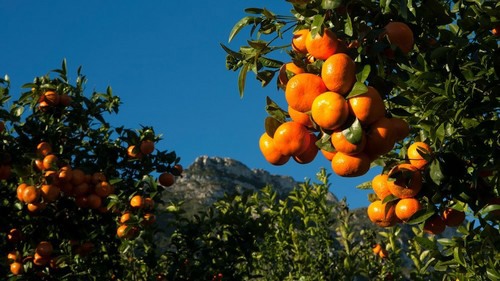 © Citruslandia S.L.
"At the moment, we are moving on to varieties with between 30 and 40% higher prices, an important leap that we don't know how the markets will react to," says Alberto Torres, of the Valencian company Citruslandia, which is specialized in the cultivation and marketing of organic citrus.
"Some batches of Nadorcott and Tango bío have already started to be sold, with higher prices compared to last season. Last year's Nadorcott bío campaign started with prices at origin of around 0.95€ per kilo, although the record production globally led to prices plummeting to below 0.55€ per kilo. This year, we are paying an average of €1.10-1.15 per kilo," said the grower and marketer.
According to Alberto Torres, the second part of the season could be very different from the first. "In the last ten or fifteen years, practically nothing has been planted with first season varieties like the Clemenules. Instead, plots have been uprooted due to the pressure of the supply and low prices. In a season like this one, with such low yields (due to the impact of the weather and pests), this has resulted in a higher demand and good prices for quality fruit."
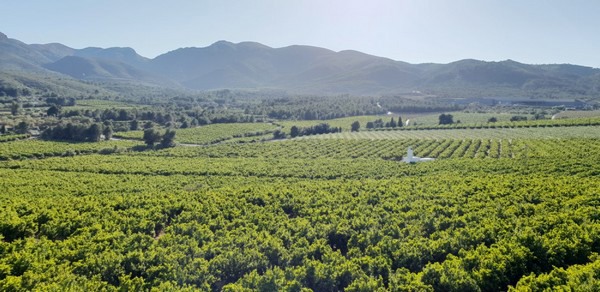
"Besides, in the last few years, the acreage devoted to the Nadorcott and Tango bío has not stopped growing, not only in Spain, but also in Italy, Turkey, Greece and Egypt. Therefore, although there is a lower production this year compared to the previous one across the Mediterranean arc, the bio supply has benefitted from the entry into production of new certified plantations," he says.
"With such high prices at origin this year and given the economic pessimism in Europe due to the energy crisis and inflation, which has already resulted in a drop of around 20% in organic product sales, the question is: Will the high prices paid at origin for second-season mandarins be sustainable? Will we be able to sell them with the same ease and at the same prices as the quality fruit from the first part of the season? This is something I'm worried about," said Alberto Torres.
For more information:
Alberto Torres
Citruslandia S.L.
C/ Vicente Sancho Tello, 23-B
46021 Valencia
T: +34 609588939
[email protected]