The ongoing conflict in Ukraine is the result of a two-year pandemic that had already forced us to radically revise many aspects of our daily life; now a further turn of events is still preventing us from finding peace. As wealthy Europeans, unaware of our well-being, we have delegated the production of essential goods to Asia, renouncing to our responsibility of guaranteeing our own survival in strategic sectors. From fans to masks (as we realized during the Covid-19 era), to raw materials, and finally (and we hope it ends here) to natural gas, our dependence on countries that embrace different values, has become apparent.
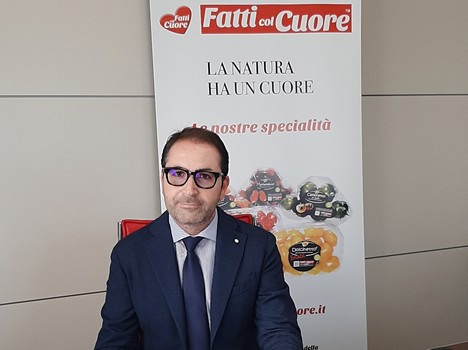 Bruno Caggia
This is what Italy actually risks Italy today is relentlessly in search of new gas suppliers, on which we also depend for the production of electricity. On a political level, our position is in line with the EU on one side and with NATO on the other. And what about food security? What is the risk for our country, which largely depends on the import of some important agricultural products? We talked about this with Bruno Caggia, a specialist in the agricultural and economic dynamics involving the European Union and Italy, and President of the Citrosol Associated Producers cooperative.
Is food sovereignty the latest debate topic? "European food sovereignty is possible and advisable - said Caggia - but we need to review the policies that, over the years, have led to the discontinuation of certain crops in Europe. The goal must be to ensure that crops within the European Union guarantee the necessary supplies to EU countries, by limiting the supply from third countries to less than 50%."
"Today Italy imports more than 60% of wheat and about 50% of corn - added the expert - Therefore the national market is largely exposed to the turbulence of the global context. It is worth mentioning that starch from wheat and potatoes is also used to produce wrapping paper; a shortage of wheat and potatoes would lead the authorities to choose to use it primarily for human food and animal feed, rather than for the production of paper which, however, is becoming more and more used for the packaging of fruit and vegetables, rather than plastic. A shortage of wrapping paper could result in the disruption of food deliveries if alternatives are not found. We might even have to revise the Green New Deal policy in Europe, which is leading, among other things, to a reduction in the use of plastic."
"It is therefore necessary to verify the internal production distribution dynamics at a European level so as to be able to take measures aimed at increasing the production capacity of some member countries more suited to the cultivation of the most necessary crops, also by using the tools of the CAP, such as the Operational Programs within the OCM-Common Market Organization. It is also crucial to start a debate at a national level to define a minimum quota of national self-supply, which allows the agri-food sector to face the increasingly frequent volatility of the market with greater peace of mind."
"European food sovereignty, therefore, represents a major political breakthrough. I hope that from now on more attention will be paid to agricultural supply chains, even if these are policies that will only have an impact in the medium to long term,” summarized the expert.
What other aspects are gaining in importance in the agricultural sector these days? "In the short term, we need to pay a lot of attention to the decisions we make. We need to calculate the costs of production and, above all, we need to evaluate the risk of not being able to have the technical means necessary to cultivate, such as fertilizers, especially when it comes to above-ground cultivation. A delay in the delivery of a fertilizer is enough to determine a reduction in yields in an out-of-soil cultivation. Today's production systems are so sophisticated that they are easily affected by crises in the supply chain. Moreover, it is not easy to calculate the increase in costs, because the situation is evolving, and therefore unpredictable; at this time, we can only make an approximate assessment," replied the interviewee.
Who will be able to intercept the massive wave of public money? The changes currently being discussed by EU countries are very serious, starting with the fact that the ecological destination of 5% of arable land (according to the new CAP) will be postponed because we need more land to cultivate for human and animal nutrition, with priority given to cereals and protein crops (legumes/soybeans). This postponement, while important, at least for the time being, will be for one year. Much more important, however, is a measure to allocate part of the PNRR funds as follows:
1.5 billion euros to support the installation of photovoltaic panels;
1.2 billion euros for the implementation of supply chain and district contracts;
800 million euros for the development of logistics;
880 million euros to ensure greater efficiency of irrigation systems and more.
"Everything is played on these allocations here, however, the first problem is to simplify and speed up. It is necessary, for example, to install photovoltaics quickly and, while the measure would seem limited to the roofs of farm buildings, we should do more, starting from the roofs of parking lots, the roofs of water tanks, reservoirs up to the agricultural land slopes that are not cultivable for the excessive slope or the presence of rock outcrops. It is necessary to allow the installation of photovoltaic panels, biomass plants, mini wind turbines, etc. etc., reducing to a minimum the necessary authorizations. From my point of view, we do not need super-bonuses at all costs. A modest incentive and the streamlining of bureaucracy and constraints is enough. Naturally, this is only true if the installations are made by agricultural companies for their own consumption and not by corporations, investor funds or similar for mere speculation. Finally, we need to encourage the use of storage batteries and the purchase of tractors and electric equipment; in fact, agricultural equipment should be charged mainly at night," said Bruno Caggia.
Speaking of practical examples and focusing on the objective need to streamline authorization procedures, Caggia said he was "optimistic, despite the rather unpredictable historical period". Only the necessary skills will allow the full use of the huge public funds that the Italian agricultural sector has at its disposal at this time, and that can finally mark the change of pace that companies have been asking for a long time.
For more information:
Bruno Caggia
Produttori Associati Citrosol 
Soc. Coop. Agr.
Sede operativa:
Strada per Resinè, km 4,2
97019 Vittoria (Rg) – ITALY
+ 39 0932 1836200
[email protected]
www.citrosol.it - www.fatticolcuore.it