Europe has put a complicated onion year behind it: The first new onions from New Zealand are on the market and Italy will soon start harvesting. During this time - traditionally in April - it is quiet at Vau-Ge Voll GmbH in Bobenheim-Roxheim.

The German onions of last year have already been used up and the company is currently still mainly dealing with leftover stocks from the Netherlands, says managing director Daniel Voll. In his growing areas in southern Italy, the harvest will begin this week: "From May 15 onwards, the first Italian onions will be sold."
The prices of the past season were exceptionally high and even at the beginning of the new season, prices are high as they have been for many years: "The remaining quantities of European onions are really very small. From the Netherlands we only expect very small volumes to come in until late May. The new volumes from Italy will not satisfy the market, and the strong demand for onions cannot be dealt with by New Zealand and Tasmania alone. These countries did have an average harvest, but were not prepared for the enormous demand from Europe."
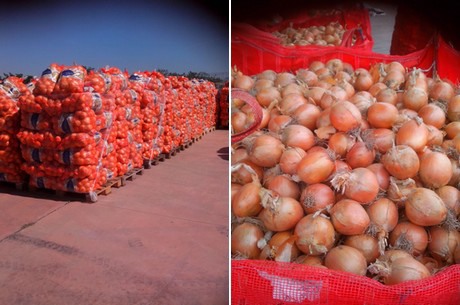
He goes on to say: "As onions are essential in the kitchen, retailers never want to be without them and suppliers like South Africa and Argentina, which have not been delivering to the German market for years, are sending in supplies this year. The fear of not being able to supply this product drives up prices even further, so this year we have seen the highest prices of the last 20 years. And this could come to pass even while the goods were partly of a lower quality, so much so that they would not have been imported in a normal situation."
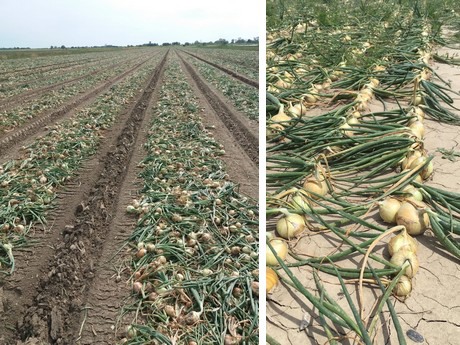
Since sowing for the new season is still ongoing in Germany and Europe until late April, no precise data on acreages is available. "However, the pure acreage does not tell it all: Depending on the weather and possibilities of irrigation, the yield may vary quite a lot. It did so in 2018, when we would have even had too much goods, had it not been for the extraordinary drought," says Voll.
The mild climate gives the Palatinate a clear advantage in terms of the cultivation of onions and other vegetables. Since it tends to be warmer there than in other regions of Germany, irrigation is also particularly well organised: "The southwest was simply better prepared for a drought." Together with the Breisgau, the Palatinate is the earliest growing area for onions. Even Asian varieties are grown there, for which it would be too cold elsewhere."
For more information:
Daniel Voll
Vau-Ge GmbH
Roxheimer Straße 24, 67240 Bobenheim-Roxheim
Phone: +49 (0 62 39) 60 43
Fax: +49 (0 62 39) 31 96
Mail: [email protected]
Web: www.vau-ge.de