Mangoes are the second most important fruits in Kenya, contributing to 21% of the total value of fruits produced. This is in comparison to bananas, which contribute 32% of the total value. Owing to the adaptation to diverse agro-ecological conditions, mangoes are produced in several counties.
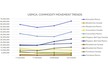
The Horticultural Crops Directorate (HCD) ranks the top 10 producing counties by value as Makueni (30%), Machakos (23%), Kilifi (16%), Kwale (8%), Meru (4.5%), Embu (2.8%), Bungoma (2.1%), Tana River (1.8%), Elgeyo Marakwet (1.1%) and Murang’a (1.1%).
Approximately 49,000 ha is under mango production, yielding about 781,000 tonnes valued at Sh12 billion (€105 mln). Most of the mangoes produced are for the domestic market. A very small percentage (less than 5%) is processed or exported.There have been efforts to better farmers’ earnings and curb post-harvest losses. The University of Nairobi post-harvest project team with support from the Rockefeller Foundation is working with smallholder farmers in Karurumo and Masii to avail low-cost cool/cold storage technologies to enable them to aggregate their mangoes and negotiate for better prices from traders.
The goal is to enable farmers attain the quality, quantity and consistency required by mango traders. Although this is expected to help farmers increase profits by negotiating for better prices, it can only work well if most farmers are in groups, thereby limiting direct sales of mangoes by individual growers.
According to an article on nation.co.ke¸empowering smallholder farmers through smallholder aggregation and processing centres has potential to improve farmers’ incomes and overall livelihoods. In addition, small-scale processing can spur growth of cottage industries in rural areas, thereby contributing to Kenya’s industrialisation.