With high aviation fuel prices and congestion on Middle Eastern waterways, shippers are exploring alternative routes. The recent ceasefire between Iran and the United States is not expected to resolve current conditions in the short term.
A U.S. freight forwarder reported that some customers are shifting shipments of consumer goods from Asia to Europe toward sea-air intermodal routes via Los Angeles to reduce costs. "This is much faster than shipping via sea around the southern tip of Africa, and much cheaper than direct air freight," said Ryan Peterson of Flexport.
The blockade of the Strait of Hormuz has contributed to higher air freight demand and rising aviation fuel costs. According to WorldACD Market Data, air freight capacity to the Middle East has declined by more than 50 per cent year-on-year in the past two weeks.
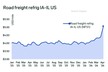
At the same time, increased passenger flights have added belly cargo capacity. Data from Flyers indicates that air freight prices from Los Angeles to Paris have risen by 8 per cent.
Noel Hasegaba of the Port of Long Beach said, "If the trade disruptions in the Middle East continue, cargo volumes at the Port of Long Beach could increase." The Port of Long Beach and the Port of Los Angeles form one of the busiest seaport clusters in the United States.
Marco Blumenthal of consulting firm Aevean said global air freight capacity, initially expected to grow by 5.5 per cent, has declined by 1 per cent since late February. He noted that recovery will depend on wide-body aircraft capacity from Gulf carriers, which accounts for about half of regional air freight capacity.
Neil van der Wood of Xeneta said that a slower recovery in Gulf tourism could lead to reduced passenger capacity and impact cargo volumes. "Gulf airlines such as Emirates and Qatar Airways operate one of the world's most important air cargo networks."
British Airways said it will reduce flights to the Middle East after services resumed, indicating lower passenger demand.
Source: WXHD