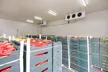
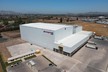
Almost every entrepreneur today is either discussing CA storage or investing in it. This trend is becoming more visible as Kashmir sees a rapid expansion of Controlled Atmosphere (CA) storage facilities across key horticulture belts.
What was once a niche segment has developed into a common investment choice, attracting businessmen, orchardists, and first-time investors. The main driver is the established apple economy in the region. Apples remain the backbone of the horticulture sector, with large volumes produced annually.
Traditionally, growers sold produce immediately after harvest due to limited storage, often at lower prices. CA storage has changed this by allowing apples to be preserved for several months without quality loss, enabling sales at more favourable market conditions. This has supported returns and encouraged investment.
At a broader level, there is a gap between apple production and available storage capacity. However, in certain areas, particularly industrial zones, CA facilities are becoming concentrated. This is increasing competition and placing pressure on storage charges, which are gradually declining. While the overall scope exists, clustered expansion may affect returns.
At the same time, high-density apple plantations are expanding. These orchards deliver higher yields and improved quality, particularly A-grade fruit suited for storage. This creates a direct link between production systems and CA infrastructure. Lower-grade fruit continues to be sold immediately in the market, meaning storage performance depends on quality as well as volume.
CA storage is viewed as a revenue-generating business through storage charges, with grading contributing to income. However, it involves high capital investment, rising electricity costs, maintenance requirements, and operational complexity, alongside increasing competition.
From an industry perspective, value is being created through post-harvest management. Profitability depends on planning, efficiency, and market understanding rather than infrastructure alone.
There is also a growing trend of investors entering the segment based on existing projects. When units perform well, additional facilities are often developed in the same areas using similar models. This reflects a level of herd behaviour. While investment growth continues, replication without planning may result in overcapacity and reduced returns.
CA storage remains part of Kashmir's horticulture system, with demand expected to increase alongside production and farming practices. However, performance depends on location planning, supply alignment, grower and trader linkages, and operational management.
The current expansion reflects both opportunity and market interest. At the same time, long-term outcomes depend on informed investment decisions.
Source: Kashmir Observer