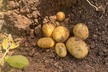
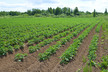
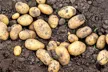
The Government of India has approved procurement of potatoes in Uttar Pradesh under the Market Intervention Scheme for the 2025-26 season, covering 20 lakh metric tons at a price of Rs 6,500.9 (US$78.00) per ton. The measure aims to ensure farmers receive stable returns and reduce exposure to low market prices.
Additional approvals include procurement of chana in Andhra Pradesh, with the ceiling raised to 1,13,250 metric tons under the Price Support Scheme, and a 30-day extension for tur procurement in Karnataka until May 15, 2026. Authorities state these measures are intended to support farmers and limit distress selling.
In parallel, potato markets in West Bengal are under pressure due to increased production. The state produced 14 to 15 million tons in 2025-26, around 20 per cent higher than the previous year. Farm-gate prices have declined to Rs 4 to Rs 5 (US$0.05–0.06) per kilogram.
Production is concentrated in districts including Hooghly, Purva Bardhhaman, Paschim Bardhhaman, Paschim Medinipur, Purva Medinipur, Howrah, Bankura, Purulia, and Nadia, with Hooghly identified as a main production area.
Growers report input costs of around Rs 30,000 (US$360) per bigha, with returns of around Rs 200 (US$2.40) per quintal. Surplus supply has reduced market absorption, with some farmers leaving crops unharvested due to storage and handling costs.
Export policy changes have also affected market access. Previously, potatoes were shipped to states including Odisha, Jharkhand, Chhattisgarh, and Andhra Pradesh. Following restrictions, these markets have shifted to alternative supply sources, reducing demand for West Bengal produce.
The surplus in the domestic market has resulted in lower price realisation, with growers reporting limited options to manage volumes. Government measures have been announced, while producers indicate uncertainty over price recovery and debt repayment.
Across the sector, higher output, reduced external market access, and pricing pressure are influencing returns, while procurement schemes are being used to support farm incomes.
Sources: Ministry of Agriculture & Farmers Welfare / The Tribune