Food prices in Canada have increased faster than overall inflation in recent years, rising by 30 per cent over the past decade. Current market conditions are influenced by higher oil and fertilizer costs, with oil trading above US$100 per barrel, compared with under US$60 at the end of January.
The impact on food prices is expected to be indirect, mainly through higher transportation and input costs. Iran is not a major food exporter, and Canadian imports do not pass through the Strait of Hormuz. However, about 20% of global oil flows through the strait, and disruptions have contributed to higher fuel prices.
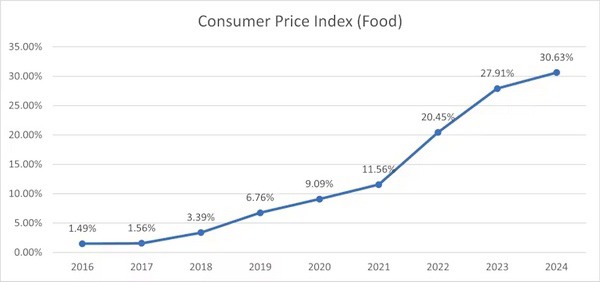 © Statistics Canada
Transportation costs represent a limited share of total food prices. The United States Department of Agriculture estimates that transport accounts for about 3.5 to 4 cents of every food dollar. However, fresh produce is more exposed, with transport representing about 8% of costs. Due to Canada's geography and seasonal factors, this can rise to 10 to 15 cents per dollar for fresh fruits and vegetables, particularly for imported products requiring refrigerated logistics.
Refrigerated transport can cost up to 30% more than dry freight by truck and up to three times more than dry freight by sea. As a result, price increases are more likely in imported fruits and vegetables. These effects are expected to moderate as domestic production increases and transport distances shorten during spring.
Higher input costs are also affecting producers. Nitrogen fertilizer prices have risen by more than 70 per cent since the start of 2026. While some farmers are protected in the short term through pre-purchased inputs, cost pressure remains. Around 25% of global urea trade passes through the Strait of Hormuz, although supply risks in Canada are limited due to domestic production and diversified imports.
Farmers are expected to absorb most of the cost increases, as global commodity pricing limits the ability to pass on higher input costs. In response, producers may adjust fertilizer use or crop selection.
Additional cost pressure is coming from petroleum-based inputs such as plastics used in food packaging. Plastic packaging accounts for about one-third of total plastic use in Canada, and higher oil prices are increasing production costs across the supply chain.
Overall, the impact on food prices is expected to remain moderate in the short term. Longer-term effects will depend on the duration of elevated oil and fertilizer costs and their influence on supply chains and production decisions.
Source: The Conversation