The pumpkin market is growing in terms of consumption and the needs of the supply chain. The most frequent demands are a consistent supply throughout the year, an increased focus on quality, and specific organoleptic characteristics and agronomic adaptability of the varieties. Levantia Seed's genetic improvement work fits into this context. For the 2026 season, Levantia Seed is presenting two new green kabocha pumpkin varieties: Amamy (KG84) F1 and Bombonera (KG65) F1.
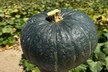
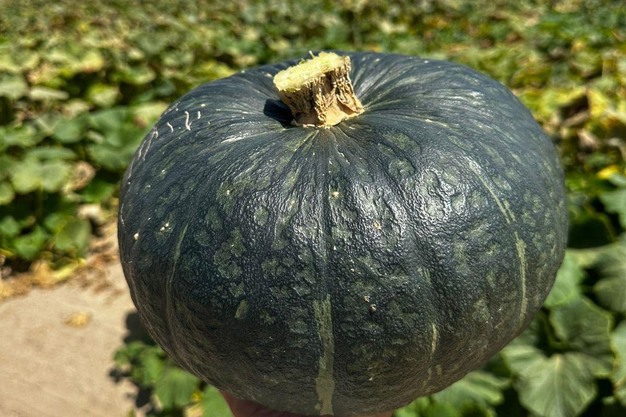 © Levantia Seed SrlAmamy (KG84) F1 big size
After a year of pre-commercial trials in various production areas, the two varieties are ready for their official launch. Experienced supply chain operators have also evaluated them. One such operator is Massimo Restani, owner of Restani Zucche in San Matteo della Decima, Bologna, a company that specializes in selecting and marketing high-quality pumpkins.
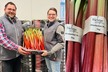
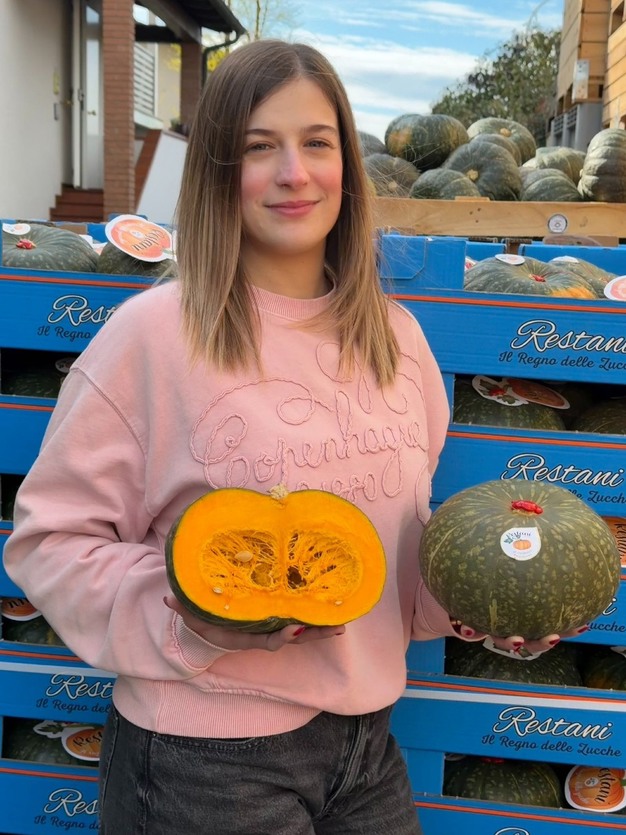 © Levantia Seed Srl"The pumpkin market has changed a lot in recent years," Restani explains. "Consumption has grown, but so have customers' expectations. Today, product availability alone is not enough; we also need quality, taste, and appropriate agronomic characteristics."
Photo on the right: Elisa Restani
According to the Bologna-based operator, pumpkin is undergoing a significant transformation from a gastronomic standpoint. Once considered a humble staple, it is now finding its way into increasingly sophisticated recipes. Over the years, consumption has boomed, and so have people's expectations. Some seek sweetness, while others favor a more pronounced "chestnut-like" flavor; much depends on its culinary use."
This evolution pushes the supply chain to produce increasingly high-performance varieties. "Agronomic and organoleptic factors form the basis of varietal development because customers are becoming more demanding," says Restani.
Genetic improvement is therefore a key tool for supporting market development. "Our goal is continuous improvement," says Samuele Pellegrini, Levantia Seed's general manager. "We always consider the needs of growers and the market together. The new varieties arise precisely from our collaboration with the supply chain."
According to Restani, of the two new varieties for 2026, Bombonera (KG65) F1 shows the most immediate commercial prospects. "It has the right size, is very consistent, and has particularly colorful and sweet flesh. The commercial prospects can only be rosy."
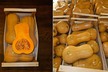
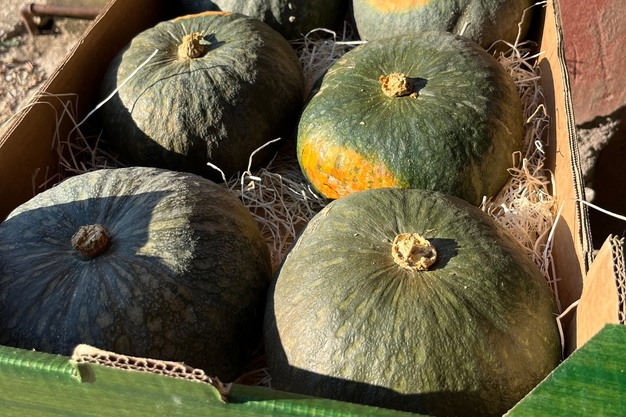 © Levantia Seed SrlBombonera (KG65) F1 in a crate
This variety is characterized by its round, uniform fruit, which averages between 1.8 and 2 kilograms in size and has orange-to-red flesh. The first batches, cultivated in Peru and arriving in Italy in recent weeks, have received positive sales feedback. "They sold out quickly," says the entrepreneur, "and they have given us great satisfaction."
Alongside the Bombonera (KG65) F1 variety, the new Amamy (KG84) F1 variety is characterized by its larger size and high yield potential. It also has a more compact, upright plant architecture compared to traditional kabocha. This feature allows for better management of field space and planting density.
"It is a very interesting variety," Restani notes. "But it is larger, which allows it to reach specific markets." As always, it depends on the area. Some places prefer larger sizes, while others prefer smaller ones."
Varietal work is also part of an increasingly international supply chain. "We try never to run out of pumpkins," says Restani. "That is why we work with counter-season production in countries such as Peru, South Africa, and Egypt. In these countries, we oversee the production process directly."
For the Bologna-based operator, final quality is the result of a combination of factors, starting with variety selection. "It's a mosaic. You need the right varieties, soils, and producers," Restani concludes. In this business, having reliable partners is essential, especially ones like Levantia Seed."
For more information:
Levantia Seed Srl
Via Luigi Savoia, 18/B
45014 Porto Viro (RO) - Italy
+39 335 5662226
+39 342 1635715
[email protected]
www.levantiaseed.it