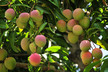
Even in stable seasons, mango is regarded as one of the more complex fruit crops to cultivate, due to its dependence on climate conditions, tree physiology, and management practices. For India, the world's largest mango producer, this has direct implications. The country harvests 23 million tons annually, accounting for almost a fifth of its total fruit output.
In recent years, growers report rising production risks. "Mango farming has become unpredictable," says Upendra Singh, who farms 6.5 hectares in Malihabad, Uttar Pradesh. A fourth-generation mango grower, he began working on the family farm at 12 years old. "Seasons no longer follow a pattern. Flowering, fruiting, and harvesting all shift every year because of climate change," says Singh, now 62. "Input costs have gone up, including pesticides, labour, and irrigation. But yields have gone down. Farmers are spending more money but earning less from mango orchards," he adds.
India cultivates almost 700 mango varieties, with regional specialization. Dasheri dominates in northern India, Alphonso in Maharashtra, and Langra and Malda in Bihar and West Bengal. Despite varietal diversity, climate variability is affecting production across regions.
"With erratic weather patterns becoming the norm, mango farming is under pressure," says Dr. Hari Shankar Singh of the Central Institute for Subtropical Horticulture. "Mango is highly temperature-dependent," he explains. "Last year, flowering happened early, strong winds affected fruit development, maturity came too fast, and much of the crop went to waste. This year, prolonged low temperatures in north India delayed flowering altogether," Singh says.
In response, research institutions are focusing on breeding mango varieties with broader temperature tolerance and improved resistance to pests and disease. However, breeding cycles remain long. Mango trees require five to ten years to flower after crossing. In addition, the crop is heterozygous, meaning offspring rarely resemble parent plants, increasing selection complexity.
"Mango breeding is a multi-decade scientific commitment, not a quick innovation," says Hari Singh.
Molecular research is being applied to shorten timelines. In 2016, ICAR led the sequencing of the mango genome, focusing on Alphonso. "Mango genome sequencing allows researchers to identify genes linked to fruit colour, aroma, sweetness, flowering behaviour, climate resilience and disease tolerance," says Hari Singh. This has reduced the 10 to 20 years traditionally required for mango breeding, according to the institute.
Source: BBC