As the Australian mango season tapers off towards late summer, Manbulloo is still harvesting late varieties in Far North Queensland, even as domestic visibility fades. While local shelves thin out after Christmas, export markets remain a central focus for the grower, particularly in the U.S. and parts of Asia, where Australian mangoes occupy a very different position from their place at home.
Manbulloo's Marie Piccone says the company expects harvesting to continue into late February or early March. The drawdown in southern markets reflects seasonality rather than supply exhaustion, but it highlights a recurring contrast: mangoes are reasonably priced in Australia, while overseas they are treated as a premium, and sometimes elite, product.
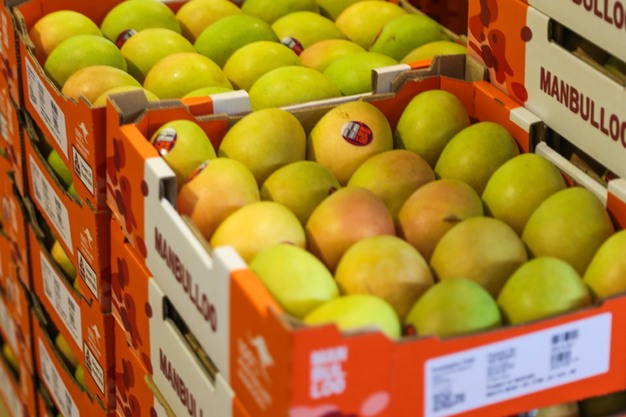 © Manballoo
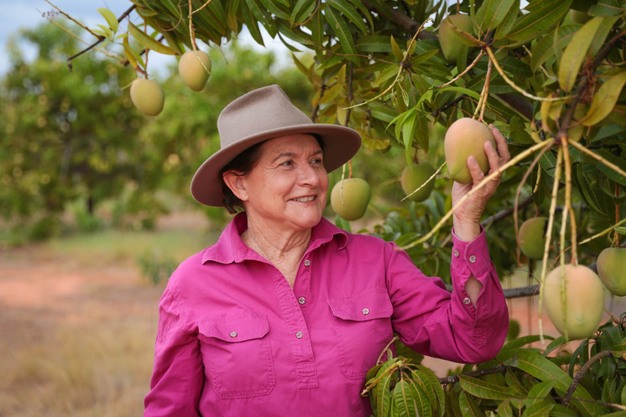
That contrast is most evident in the U.S. Australian mangoes are sold into a narrow, top-end segment, largely because of the special flavour and eating experience of Kensington Pride and R2E2 mangoes, the quality, and the cost. "There are only particular retailers (including online) that can sell Australian mangoes because of the price point," Piccone says. With prices three-to-five times higher than mangoes from Central and South America, the market is inherently niche.
Accessing it is also complex. The U.S. operates under stringent phytosanitary protocols, including irradiation, extensive documentation, and full traceability. Fruit must be flown rather than shipped by sea due to transit times and further lifting costs. "The U.S. is not for the faint-hearted," Piccone says, noting that the economics only work if growers achieve a carefully calculated return per tray.
 © Manballoo
Asia presents a more varied picture. Non-protocol markets such as Singapore and Hong Kong are relatively straightforward, while Japan, Korea, and mainland China require vapour heat treatment and strict pest controls. These markets demand expensive infrastructure and highly disciplined harvesting, with fruit picked at a precise maturity stage. As a result, Australian mangoes again sit firmly at the top end and can achieve the price premium required because of the eating experience and the quality.
Across all export destinations, flavour and the eating experience ultimately make all the difference. Piccone is blunt about why buyers choose Australian fruit over cheaper alternatives. "Because of flavour and because consumers are willing to pay more for the joy of eating our best varieties. That's the only reason." Consumer research and commercial experience, she says, consistently show strong international demand for Kensington Pride and R2E2, varieties known for eating quality rather than appearance alone.
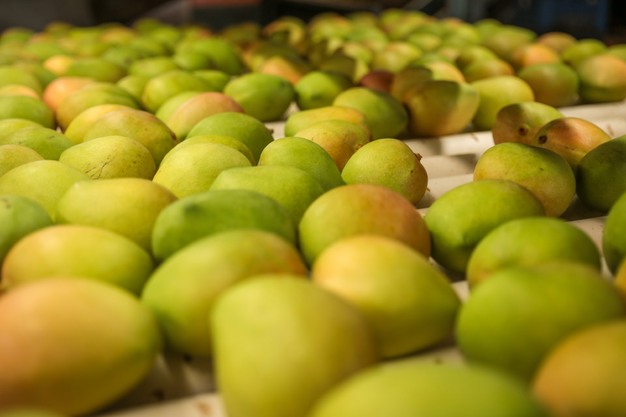
In markets such as Japan, some fruit is destined for the high-value gift trade, while the rest goes to premium retailers serving consumers willing to pay for quality. Either way, mangoes are positioned as a 'high-end' purchase, not a commodity. That mindset differs sharply from Australia, where mangoes are often viewed as seasonal bargains and are often judged heavily on external appearance.
 © Manballoo
This season, Manbulloo has seen strong packouts of premium fruit for much of the year, though heavy rainfall has recently affected cosmetic quality, increasing blemishes and surface moulds. While internal eating quality remains high, visual defects reduce the proportion suitable for domestic and export-grade programs, tightening margins.
Despite domestic price volatility and rising production costs, Manbulloo maintains a consistent export presence. The company has exported every year for 18 years, including during Covid, rather than treating exports as a release valve when local prices soften. "We export to our customers no matter what," Piccone says, emphasising the importance of long-term relationships. "Only natural disasters stop us from exporting."
For Australian mangoes, export growth is less about volume and more about reinforcing their status as a premium fruit. As incomes rise across Asia and discerning consumers seek flavour-led experiences, Manbulloo sees continued opportunity at the top end.
For more information:
Marie Piccone
Manbulloo Ltd
+61 (0) 417 616 476
Email: [email protected]