The South African stone fruit season has been particularly challenging so far. "The weather at the source has been good so far, but there are major problems at the logistics level this year," summarizes Christian Hencke, specialized stone fruit importer and managing director of FFC Fresh Fruit Company GmbH. "The port of Cape Town faced the windiest November and December in years, which led to corresponding ship delays. We are now receiving 'wave-like' arrivals, which means we cannot guarantee our food retail customers specific quantities for promotions."
The significant ship delays and extended transit times are, in turn, leading to increased quality issues, according to Hencke. "We sometimes receive goods that were packed at the point of origin a long time ago. This is reflected in the write-offs at the POS: for plums, there is spoilage of up to 20%, four to five times higher than the long-term average. The figures are even more serious for nectarines. Given the current reluctance to buy, which we are already observing, the condition of the goods unfortunately does not encourage end consumers to make repeat purchases." Alternative countries of origin, above all Chile, could possibly benefit from this exceptional situation, believes Hencke.
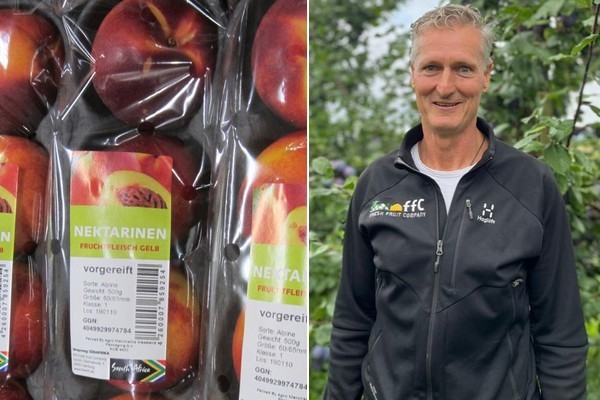
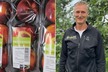
Christian Hencke is the managing director of FFC Fresh Fruit Company GmbH and has specialized in stone fruit from South Africa over the years.
However, the signs were promising, Hencke continues. "The weather at the source was consistently good, and the harvest also started according to plan. However, logistics threw a spanner in the works so that the first deliveries did not arrive until mid-December, about two weeks later than originally expected. In this case, I would call it "force majeure," as neither the exporter nor we as importers have any influence on such extreme weather conditions." One alternative would be to handle shipments via the nearest port in Port Elizabeth, which would result in higher costs. For many exporters, however, the additional land transport of almost 700 kilometers is too expensive and ultimately unprofitable. Another option is conventional ships, which are somewhat less dependent on the wind but also entail higher sea freight rates.
Large arrivals expected on the EU market
Larger deliveries of plums and nectarines are expected from weeks 5-6 onwards. However, according to current figures, a significant proportion of the quantities already inspected for export are still in seaports. Hencke: "The US customs surcharges have made this market considerably less attractive, resulting in a shift in volume towards Europe. The Chinese market is on the rise, but it is still too small to provide us with any significant relief. This means that we will still be faced with a large volume in the foreseeable future, which will cause unrest, especially on the free market."
 © FFC Fresh Fruit Company GmbH - Hamburg
New varieties and PPWR-compatible packaging
Outside the current season, the overseas stone fruit category has developed quite well in recent years. "South African nectarines in particular – which we usually offer until week 14-15 – show a trend towards replacing the old varieties, with an annual increase in volume of around 15-20%. The Chilean sector has now also recognized the potential of these new varieties, so we can expect tougher competition here in the next two to three years. We are also seeing a gradual shift towards new, modern varieties in plums, which are expected to be available until week 21-22. In close cooperation with Cultirex, a joint venture between Ben Dor and Rubisco, new varieties are being made available to producers in South Africa. The main focus here is on taste, large size, good yield, and long shelf life."
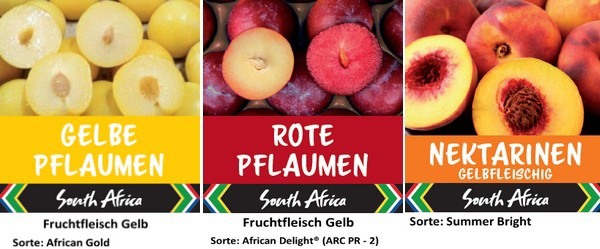
Peaches of South African origin, on the other hand, play a minor role in the European market. Here, there is a shift in volume from Europe to the Middle East, Hencke explains. For apricots, on the other hand, the trend remains unchanged. High-quality late varieties are particularly popular here, some of which are currently finding their way into the premium programs of European food retailers as air freight. The debate surrounding the EU Packaging Regulation (PPWR, effective January 1, 2030) also affects the stone fruit category. "We believe we are already well equipped for the future with our new, environmentally friendly packaging, which we have been using for many years. In addition, we have our stone fruit concept 2.0, with new labels and a new cardboard tray for nectarines. Sales are to be further boosted by recipe inserts for plums and nectarines," he concludes.
 © FFC Fresh Fruit Company GmbH - Hamburg
New nectarine tray
For more information:
Christian Hencke
FFC Fresh Fruit Company GmbH
Oberhafenstraße 1
Fruchthof, 2nd floor
D - 20097 Hamburg
Phone: +49 40/32 52 97 - 28 / - 29
E-Mail: [email protected]
www.freshfc.de