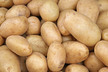
The Odisha government has announced a plan to achieve self-reliance in potato production, aiming to reduce dependence on neighboring states for food supplies. Officials said the state targets cultivation on more than 20,200 hectares (50,000 acres) this year, doubling output from the previous season.
Deputy Chief Minister and Agriculture Minister KV Singh Deo launched the state's Rabi campaign and stated that Odisha intends to end external dependence for potatoes. As part of the plan, the government will distribute 300,000 quintals (30,000 tons) of certified seed potatoes to farmers, compared with 160,000 quintals (16,000 tons) in the 2024–25 season.
Odisha's annual potato requirement stands at about 1.4 million tons, while current production reaches roughly 476,000 tons. Output has gradually increased from 313,000 tons in 2022–23 to 382,000 tons in 2023–24 and 476,000 tons in 2024–25. Officials expect this year's expansion to narrow the supply gap and help stabilize domestic prices.
To support the higher production, 13 new cold storage units have been completed, with 45 more planned under a public-private partnership model. The state currently operates 35 cold storage facilities with a combined capacity of 172,000 tons. The expansion aims to improve post-harvest handling and reduce storage losses.
The program also includes promoting large-scale cultivation of onions, chillies, and garlic across multiple districts to diversify Rabi cropping patterns. Farmers from areas such as Bhatli and Padmapur have expressed support for the initiative, citing expectations of timely seed distribution and improved market access.
Source: Argus