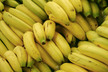
Vietnam's banana sector is seeing impressive growth, with a cultivated area of over 161,000 ha producing nearly 3 million tonnes in 2024. The Mekong Delta, Southeast, northern midlands, and Red River Delta are the country's primary growing regions, with the Southeast achieving the highest yield at around 34.5 tonnes/ha, thanks to advanced cultivation methods as reported by Nong nghiep moi truong.
Vietnam exported approximately 625,000 tonnes of bananas to China in 2024, the largest share of China's banana imports. Other demanding markets include Japan, South Korea, the U.S., ASEAN countries, the EU, and the Middle East. Despite this expansion, most Vietnamese bananas are still exported fresh, with minimal processing.
To improve competitiveness and value, industry experts emphasise the need for stricter quality control, full traceability, and compliance with international quarantine standards. They advocate expanding into value-added banana products, such as dried chips, powders, and snacks, to escape low-price competition and extend the supply chain.
By 2030, Vietnam aims to maintain banana cultivation at around 165-175,000 ha, focusing on optimising efficiency rather than expanding acreage. Some pioneering companies, like Unifarm, are adopting high-tech, end-to-end production models, covering variety selection, cultivation, harvesting, and traceability, to meet international standards.
Currently, average export revenue stands at only $2,400 per hectare, but experts believe this could rise to $20,000 per hectare through improved technology, resilient varieties, modern logistics, and dedicated processing.
Source: Nong nghiep moi truong