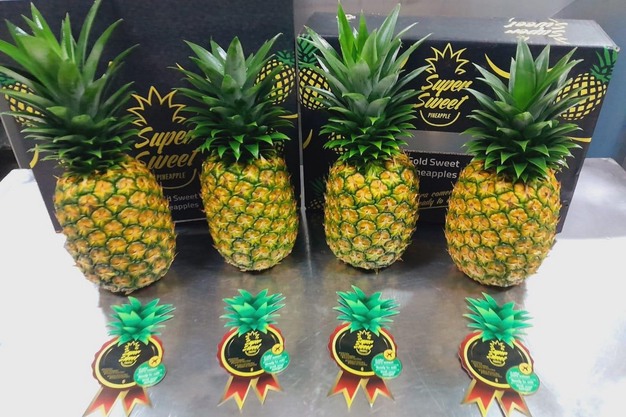
Costa Rica, the world's leading pineapple exporter, is at a crucial stage in its production cycle, marked by a recurring yet important event: natural flowering. "This process influences supply and market prices," stated Eric Ramírez, sales representative for Tropicales del Valle.
 © Tropicales del Valle
This phenomenon, caused by thermal stress associated with low temperatures, induces early flowering. "As a consequence, between 20 and 22 weeks later, there is a concentration of fruit on the market. There could be an overproduction or oversupply of fruit in the coming weeks," Ramírez stated.
Tropicales del Valle continues to operate at full capacity, aligning with industry trends. Although the industry is prepared for production peaks, climate change has made volume forecasting more difficult. "Events used to be very characteristic, but now they occur throughout the year, which greatly disrupts supply predictability," he explained.
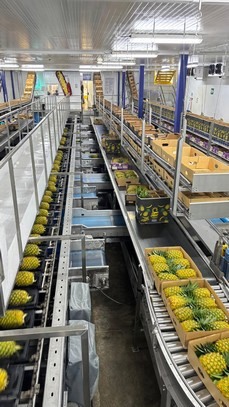 © Tropicales del ValleOn the market side, the situation is complex. Industrial demand, particularly for pineapple juice, has kept prices relatively high in recent years. "This is partly because the global availability of oranges has decreased, making pineapple a preferred substitute in the concentrate industry. As a result, demand for pineapple juice has started to rise, maintaining high fruit prices for the industry this year," he said.
However, rising supply is starting to put pressure on open-market prices. Nonetheless, fresh pineapple prices have held steady in major markets such as Central Europe, the Mediterranean, and the United States, particularly in higher-value-added categories. "Prices have remained positive and favorable for us so far," he said.
In the upcoming weeks, the industry is preparing for potential adjustments due to higher volume. As a result, a decrease in production, called the "production gap," is expected around week 20, caused by the early release of fruit during natural flowering.
Beyond production, the sector faces structural challenges. These include rising logistics and energy costs, exacerbated by the geopolitical context. "The increase in freight costs is very large and constant, which affects a lot because you can't establish business in the medium or long term," Ramírez warned.
 © Tropicales del Valle
"The sector may also face a fertilizer shortage due to global logistics disruptions caused by the Middle East conflict. Additionally, the local currency's appreciation against the dollar has reached levels not seen in twenty years. This sharp increase reduces local-currency revenues and makes it harder to meet financial obligations, all while producer profitability continues to decline," he said.
Despite this scenario, companies continue to bet on maintaining their presence in strategic markets, primarily in Europe, which accounts for most of Costa Rica's exports. "In parallel, the incorporation of new production areas could help mitigate the effects of supply volatility during the rest of 2026," he concluded.
For more information:
Eric Ramirez
Tropical Valley
Costa Rica
Tel: +506 2239 9660
Tel: +506 8826 5735
Email: [email protected]
www.tropicalesdelvalle.com