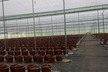
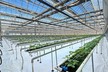
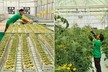
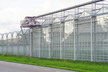
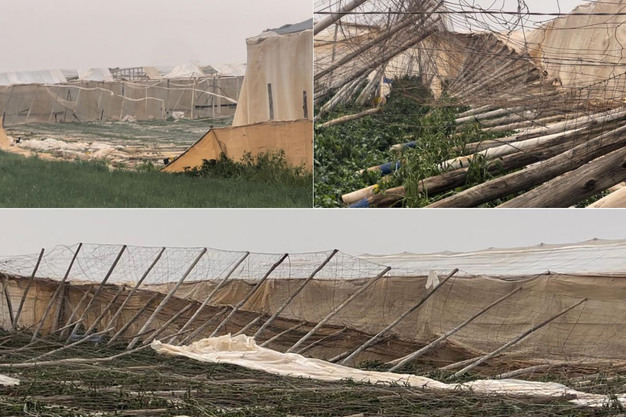
The storm that struck the Souss-Massa horticultural region in Morocco in late February caused considerable damage to crops and infrastructure. Available estimates put the toll at thousands of hectares of greenhouses blown away by the strong winds, although the official assessment has not yet been released. Six weeks later, the greenhouses still lie in ruins due to a shortage of available materials. Ferdouas El Barnossi, from the greenhouse construction company Smidcom, provides an update on the situation and discusses the issue of greenhouse resilience in Morocco.
 © SoussMassa
Widespread damage, a rush to rebuild, and a plastic shortage
Strong winds exceeding 100 km/h caused significant damage to the plastic sheeting of Canarian greenhouses across a wide area in the region. According to growers, plastic is the most difficult component of the greenhouses for them to find and replace. El Barnossi reports, "The situation observed on the ground in the Souss-Massa region fits a well-known economic pattern: that of a sudden, time-concentrated surge in demand inducing a shortage. Following the storm, a significant portion of greenhouse areas required immediate replacement of the covering film. As a rough estimate, one hectare of greenhouse uses an average of between 1.3 and 1.8 tonnes of plastic film, which generates, in just a few days, an additional demand of several thousand tonnes."
The rush to rebuild the greenhouses stems from an urgency inherent in the production model. El Barnossi explains: "In this type of situation, demand is inelastic: growers cannot delay repairs without directly compromising their production, which automatically increases pressure on deadlines and prices. This situation could have a short-term impact on production cycles, particularly for sensitive crops such as berries and vegetables, due to the plants' temporary exposure to inclement weather."
 © SMIDCOM
In this context, according to El Barnossi, supply capacities, whether from imports or domestic production, have come under enormous pressure. She insists that this is not a structural market shortage, but rather a temporary imbalance between exceptionally high demand and a relatively inflexible short-term supply, maintaining that the international context plays a key role.
"Before the storm, the price of agricultural plastic film generally ranged from 28 to 38 MAD/kg for imported film and from 26 to 34 MAD/kg for locally produced film. Today, due to the combined effect of exceptional demand and supply chain pressures, these prices can reach 40 to 60 MAD/kg for imports and 35 to 45 MAD/kg for locally produced film, depending on the product's technical specifications. This increase is driven by several economic factors: immediate pressure on local demand; short-term supply rigidity; and a direct pass-through of international costs to the local market," she explains.
 © Youness Bensaid | FreshPlaza.com
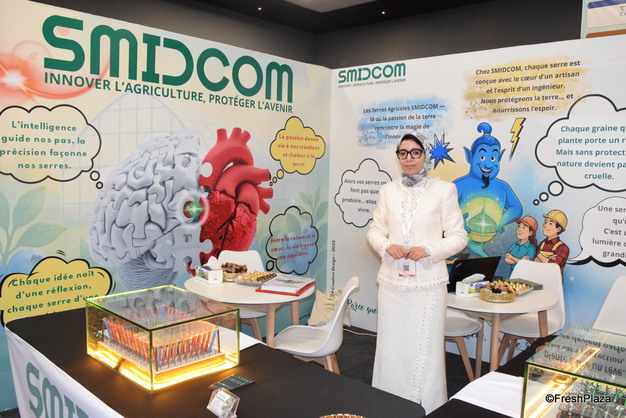
Firdaous El Barnossi at the 2025 edition of the Morocco Berry Conference
These international constraints are none other than the ramifications of the war in the Middle East. Not only do plastic pellets used by local manufacturers come from origins directly affected by the conflict, such as Saudi Arabia, but agricultural films are derived from polyethylene, a petroleum-based material. El Barnossi adds that current geopolitical tensions, particularly in the Red Sea and the Middle East, are disrupting strategic shipping lanes such as the Suez Canal, leading to a significant increase in transportation costs and logistical delays.
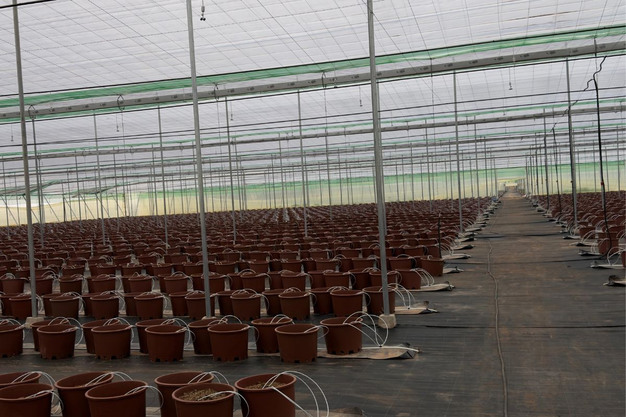
On the ground, in Souss-Massa farms, these rising costs are weighing heavily on growers. El Barnossi does the math: "Per hectare, with an average requirement of 1.5 tonnes, a price increment of 10 to 15 MAD/kg can result in additional costs of approximately 15,000 to 25,000 MAD just for plastic sheeting, not to mention other components, labor costs, and the cost of mobilizing teams. In the medium term, these pressures on inputs are partially passed on to agricultural production costs, with a risk of sharp price increments in certain sectors."
 © SMIDCOM
Greenhouse builders need another six weeks
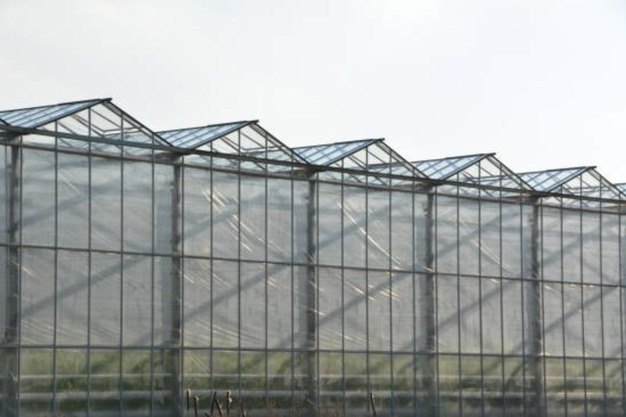
Beyond financial losses, reconstruction of greenhouses is being delayed by a lack of sufficient materials, skilled labor, and time constraints. According to El Barnossi, the timeline for restoration must be assessed based on two main factors: the extent of structural damage and the availability of materials. She explains, "In cases where only the plastic sheeting is affected, repairs can be completed in a relatively short time."
However, for many growers, delays are mounting. Six weeks after the storm, it will take another six weeks to return to normal, according to El Barnossi: "In the current context, the limiting factor remains the availability of resources. Given the volumes to be processed and logistical constraints, the overall restoration of affected areas could take 3 to 6 weeks, or even longer for farms requiring more complex interventions. This timeframe essentially corresponds to the time needed for the supply chain to resume smoother operations. However, the Moroccan agricultural sector has repeatedly demonstrated a strong capacity to adapt, with operators mobilizing quickly and effectively, accelerating the return to normal."
 © SMIDCOM
Among growers, resilience is clearly accompanied by a sense of discouragement. Some producers say the season is already over for them, while others are waiting for government support. Many shared that it will take several months for them to get back on their feet.
"Beyond the current economic situation, this episode highlights a deeper reality: the agricultural greenhouse sector's dependence on imported strategic inputs," El Barnossi states.
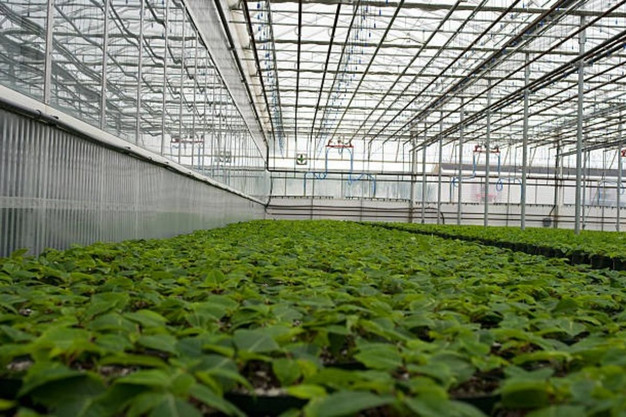
"The agricultural plastic film market is relatively concentrated on an international scale, with a limited number of resin producers and converters. This concentration makes the sector particularly vulnerable to simultaneous shocks, whether climatic, industrial, or geopolitical. Furthermore, local production itself remains dependent on imported raw materials, which limits its ability to quickly absorb such shocks. High-performance technical films, particularly those offering greater mechanical strength or specific treatments, are generally more exposed to supply chain pressures due to more specialized supply chains," she adds.
 © SMIDCOM
Toward a new approach to greenhouse production?
The issue of greenhouses is not new and has frequently come up in discussions within the Souss Massa horticultural industry for years. Technical possibilities, including in terms of yields and resilience to adverse conditions, are restricted by economic constraints. Thus far, growers acknowledge to be convinced of the need to move to the next stage, beyond Canarian or low-tech greenhouses, but remain contingent on the imperative of price competitiveness in the international fresh produce market.
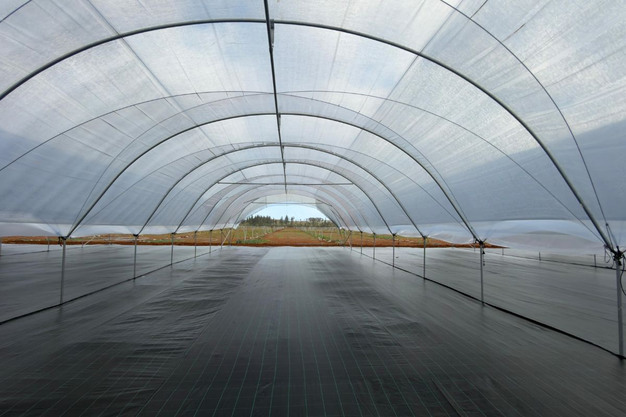
For El Barnossi, recent events are yet another call to rethink the economic approach to greenhouse projects. She adds, "It is no longer just a matter of optimizing the initial installation cost, but of adopting a lifecycle cost perspective that takes into account sustainability, resilience to climate hazards, and the ability to limit losses in the event of extreme weather. In this context, a greenhouse with a lower short-term cost can generate much higher costs down the line if it doesn't meet the technical requirements of the site. This situation should also encourage a gradual rise in technical standards for greenhouse design, particularly regarding resistance to weather-related impacts."
 © SMIDCOM
"No structural damage recorded in our greenhouses"
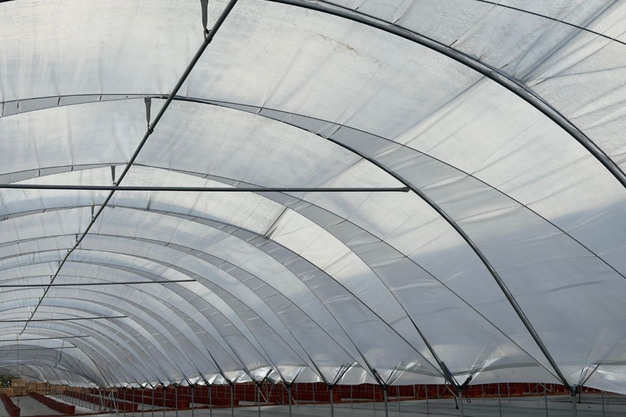
El Barnossi is a long-time advocate of greenhouse modernization, though she remains mindful of the constraints faced by many growers, while others have already switched or are in the process of switching to robust, high-tech infrastructures. For her, the recent storm should not be viewed as an isolated event, given the context and the country's location in one of the most vulnerable regions of the world to climate change. "A fundamental point emerges: a greenhouse's performance depends above all on the quality of its design," she argues.
"In our approach, we incorporate precise parameters related to climatic loads, particularly wind loads, right from the design phase, using safety coefficients adapted to the specific conditions of central and southern Morocco. Thanks to this technical rigor, we are able to report that our structures have maintained excellent stability, with no structural damage recorded in our greenhouses, despite the storm's intensity. This confirms that investing in engineering early on is a key factor in reducing risks and controlling costs in the long term," El Barnossi adds.
"In an environment marked by increasing climate, economic, and geopolitical volatility, the resilience of agricultural infrastructure is becoming a central issue. We can no longer afford to focus solely on production, but must also manage risks. Beyond the urgent need for recovery, the current situation raises a strategic question for the entire sector: Should we simply rebuild, or should we rethink standards to better anticipate future crises?" she concludes.
For more information:
Ferdaous El Bernossi
Smidcom
Tel: +212 661-459107
Email: [email protected]