The pressure on the fruit and vegetable industry is growing noticeably: staff shortages at packing stations, rising labor costs, and, at the same time, high demands on quality and delivery reliability are posing major challenges for companies. "Manual processes such as packing bags into boxes, labeling, or palletizing are increasingly becoming a bottleneck. The solution is obvious: intelligent automation," explains Sener Akdem, Sales Manager at Ilapak Packaging Machinery GmbH.
Holistic solutions instead of isolated solutions
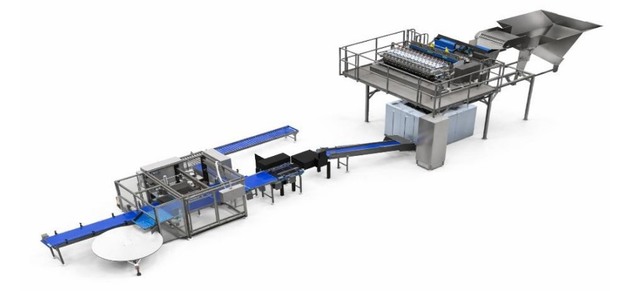
The company, based in Horst, is part of the Italian IMA Group and offers modern, end-to-end packaging lines that are precisely tailored to the sector's needs. Akdem: "From precise weighing to packaging with vertical or horizontal form-fill-seal machines, all the way to fully automated complete solutions—all processes mesh seamlessly. The goal is to achieve maximum efficiency with minimal staffing."
 © Ilapak
IMA/Ilapak offers complete solutions from a single source.
Automated carrot packaging
Akdem demonstrates the potential of modern plant technology using carrots as an example: "Carrots are automatically weighed and packaged, checked by a checkweigher, and then packed into boxes according to the desired weight or quantity. This is followed by fully automated palletizing. The result is a seamless, reliable line that delivers consistent quality while sustainably reducing operating expenses."
According to Akdem, a particular advantage lies in the integrated approach: "Under the umbrella of the IMA FLX Hub, the group brings together various specialized companies. This results in tailor-made complete solutions—individually planned, efficiently implemented, and optimally tailored to the respective customer requirements," explains the packaging specialist.
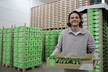
 © Hugo Huijbers | FreshPlaza.com
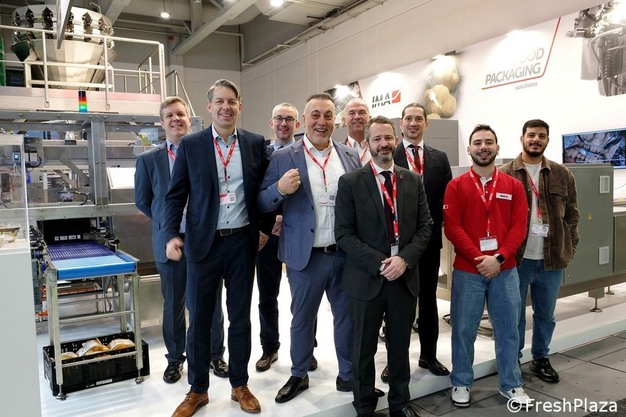
The IMA/Ilapak team at this year's Fruit Logistica, with Sener Akdem (4th from left). The company has been a regular exhibitor in Berlin for many years.
'PPWR can drive innovation'
A sensitive issue is the upcoming EU Packaging and Packaging Waste Regulation (PPWR), which officially takes effect on January 1, 2030, and is intended to reduce packaging waste and promote recycling and reusable packaging. This particularly affects the fruit and vegetable sector, as many products are currently sold in single-use packaging, according to Akdem. "The companies' strategy is based on several cornerstones. First, they are trying to optimize existing packaging while saving material and maintaining functionality. At the same time, however, new solutions—such as alternative materials, reusable packaging, and pilot projects—are being developed."
The challenges here are obvious. Akdem: "Products must not be damaged or scattered in the supermarket. Increased packaging costs have a significant impact on prices, although it should be noted that fruits and vegetables are sold at comparatively low prices in Germany. The main uncertainty lies in who will bear the additional costs: producers, packing stations, or supermarkets." The examples of adaptation vary considerably depending on the product category. "For cucumbers, the necessity of packaging is under scrutiny, so alternative materials or even unpackaged goods are increasingly available. For berries, there is a strong focus on recyclable trays, reusable solutions, and reducing plastic. For potatoes and onions, on the other hand, there is a strong emphasis on mono-packaging for better recyclability."
Beyond the uncertainty in the sector, Akdem believes the PPWR could also drive innovation. "Sustainable materials, efficient packaging solutions, and improved recyclability: these are all issues that ultimately contribute to environmental friendliness and the further development of the entire sector. Close collaboration with suppliers and flexible concepts help manage the uncertainties."
Increasing efficiency and competitiveness
As a supplier of innovative packaging technology, Ilapak has set itself the goal of further advancing automation in the fruit and vegetable industry. "Whether it's entering the world of automation or expanding existing lines—IMA/Ilapak supports both well-known and medium-sized companies as a strong partner on the path to greater efficiency and competitiveness," he concludes.
Visit the company at Interpack: Hall 17 / A20-1-8
For more information:
Sener Akdem
Ilapak Verpackungsmaschinen GmbH - Horst Division
Marie-Curie-Allee 8
25358 Horst
T: 0049 (0)4126-39349-18
[email protected]
www.ilapak.com