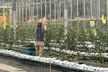
Avocado and almond orchards in Israel are entering peak bloom in March 2026, with pollination taking place under operational constraints. Growers are managing fieldwork alongside ongoing disruptions during a critical window for fruit set.
"Agriculture is a vital industry; we don't stop," says Uri Shpatz, chief agronomist at Banannot HaHof. Shpatz oversees farms across multiple regions and notes the impact of recent events on infrastructure and operations.
"We go out to the fields, and when there's an alert, we simply lie flat on the ground and wait," Shpatz explains. He adds that maintaining crop performance remains a priority. "We cannot afford a mediocre harvest, especially now when expenses are so high. There is too much at stake to let a season go to waste."
At Kibbutz Eyal, operations manager Ofri Yongrman-Sela is managing reduced labour availability during the pollination period. Pollination is required for fruit set, which determines yield outcomes for the season.
"The beekeeper we work with has half his team serving in the reserves," Yongrman-Sela says. "We've had to place honeybee hives under active sirens. Because we cannot move freely in the fields to tend to the hives as we usually do, the entire yield is at risk. If the fruit doesn't set now, there is no crop to save later."
The pollination window lasts about four weeks, requiring coordination of inputs and field access. To manage risk, growers are using technology to support pollination.
Yongrman-Sela describes the system as a complement to natural pollination. "It's a force multiplier that ensures we reach the minimum required yield even when our traditional routines are disrupted."
Technology developed by BloomX combines robotic tools and data analysis to support pollination. The system uses data on flowering patterns, weather, and field conditions to guide timing. Equipment replicates pollination through vibration or electrostatic transfer, depending on the crop.
"Under normal conditions, our solution is designed to maximize yields and push productivity to its full potential," says CEO Thai Sade. "But in a prolonged period of disruption, that same technology becomes a critical safeguard. We are giving farmers a tool that makes the season consistent and predictable, ensuring they can complete the pollination process even when time and access are limited."
Growers report that the use of technology supports continuity of operations during the bloom period. "It gives us the peace of mind that we will reach the required yield and even exceed it, even if the work we are used to is disrupted," Yongrman-Sela concludes.
Pollination outcomes during this period will determine yield levels for the upcoming harvest cycle.
Source: y net Global