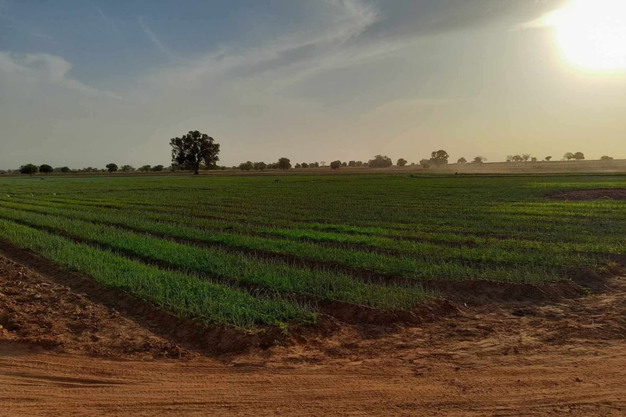
Potato and onion production in Senegal, particularly in the Sine-Saloume region, benefits from substantial assets, including an abundance of fertile land, freshwater resources, favorable climatic conditions, and an available workforce. However, it is also held back by challenges such as a lack of exposure, difficulty in marketing products, and the need to structure the horticultural value chain.
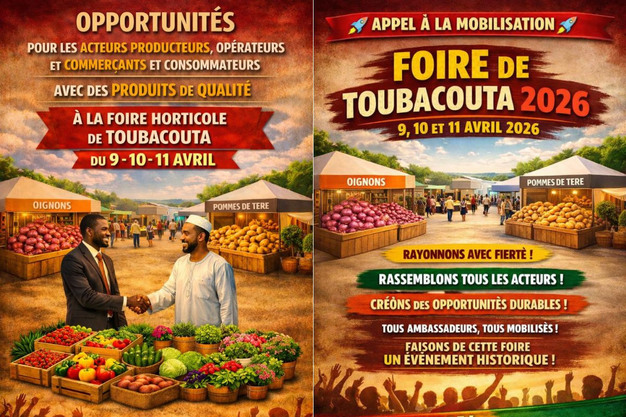
It is in this context that the "Gunge Mbay" project, led by Enabel and funded by the European Union, is stepping in to develop several agricultural sectors, including horticulture, particularly potatoes and onions. Among the project's flagship initiatives is the organization of the Toubacouta Horticultural Fair, taking place from April 9 to 11.
 © Diouf
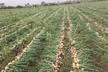
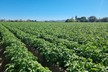
Ousseynou Dieng, an expert in sector structuring and commercial intermediation at Enabel, states, "The region, which is part of the groundnut belt, boasts significant potential for producing crops essential to food security in Senegal and for employment. However, it still lacks structuring and consolidation. We're talking about 2,000 hectares of onions and 500 hectares of potatoes in this region alone, operated by cooperatives, not counting those operated individually. At the same time, Senegal continues to import onions for twenty days a year and potatoes for three months a year."
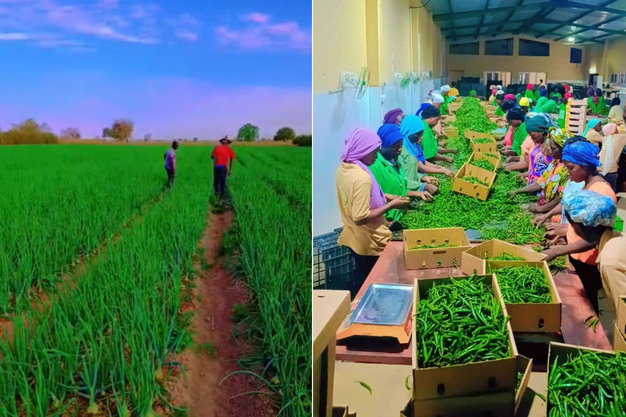
The Gunge Mbay project has identified several areas of focus to support production. Dieng explains: "The project has developed a holistic strategy aimed at supporting the development of agricultural value chains, focusing on several aspects, including financial support for operators, the promotion of best practices in fertilization, commercial intermediation, and the horizontal structuring of the value chain through the strengthening of interprofessional organizations. Holding the Toubacouta fair is an important step because it increases the visibility and reach of different actors while bringing together the various project partners and the growers themselves.
 © Diouf
Aminata Dominique Diouf, a farmer from the Sine-Saloum region who grows potatoes, onions, and early-season vegetables, affirms that the fair and the project as a whole are valuable and well-received by farmers. "If we want to achieve food sovereignty both in Toubacouta and throughout Senegal, we must simply start planting, and then we must absolutely move away from traditional agricultural models toward integrated agriculture. If agricultural imports to Senegal were to stop tomorrow, how would the Senegalese market do? That is the burning question that demands immediate action," she says.
"The fair will allow us, as producers, to raise the profile of our operations and find fair commercial opportunities in the domestic market. It is also a place for small-scale producers in the region to share knowledge about arboriculture, vegetable farming, agricultural fruit processing, and future agricultural activities, including rural tourism," Diouf continues.
 © Diouf
The ambition extends to bypassing imports and supplying the regional market. "There are currently exports of Senegalese onions and potatoes to certain European markets, but these are carried out by only a few players. We believe we have sufficient production potential, in terms of volume, to supply the regional market, including Gambia, Guinea-Bissau, and Mali," he concludes.
For more information:
Ousseynou Dieng
Enabel
Email: [email protected]
Aminata Dominique Diouf
Domaine agricole du Nema
Email: [email protected]