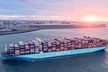
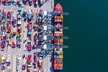
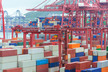
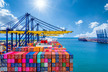
The European Union has committed US$184 million to African maritime infrastructure under its Global Gateway Strategy, with the Port of Durban identified as a main beneficiary.
For South Africa's fresh produce sector, which exports more than 2.6 million tons of citrus annually alongside growing volumes of avocados and stone fruit, the investment may support improvements in port performance that have affected cold chain management.
Port of Durban: A fresh fruit gateway
Charlina Vitcheva, Director General of the European Commission's Maritime Affairs and Fisheries, confirmed during the Ocean Innovation Africa Summit that she would assess EU-funded expansion programmes in Durban this week.
The funding follows EU-backed loans to Transnet, South Africa's state-owned port operator, structured with concessional terms to support infrastructure upgrades.
While at the Summit, Vitcheva said, "We know very little about the ocean. There is so much to explore; closing that knowledge gap is key to unlocking the blue economy's full promise."
For exporters of perishable products, Durban's performance influences market access. Congestion at the port has led to reefer containers experiencing temperature fluctuations, vessels missing scheduled arrival windows in Europe, and containers being delayed during peak shipping periods.
Cold chain implications
EU investment is focused on infrastructure supporting cold chain operations. Measures include expanding reefer plug capacity, improving pre-cooling facilities, and reducing vessel turnaround times. These changes may reduce demurrage costs and support more consistent scheduling. This is relevant for products such as avocados and table grapes, where shelf life is limited.
A related initiative, OceanEye, supported by US$54 million from Horizon Europe, focuses on ocean observation and digital twin technology. This may support voyage planning and reduce uncertainty linked to weather conditions, supporting cold chain management over longer distances.
Middle East connection
While the EU remains South Africa's largest fresh produce market, exports to Middle Eastern destinations, including the UAE and Saudi Arabia, are increasing. The EU's approach to institutional cooperation may provide a framework for similar engagement with Gulf Cooperation Council markets.
EU Ambassador Sandra Kramer stated that the loans to Transnet were provided with "very concessional conditions," highlighting the EU's focus on infrastructure development in the region.
Source: Food Business