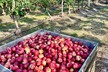
Fruit growers in Čačak report that cold stores remain full of locally produced apples, with limited demand on the domestic market. Growers state that imports from Poland, North Macedonia, and Moldova have increased supply and reduced interest in local fruit.
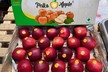
According to the Agricultural Cooperative Čačan, apple sales typically begin in early to mid-February, but this season demand has not developed. "Our market is flooded with imported apples, especially from Poland this year. It started with the import of apples from Macedonia and Moldova, and now Polish apples have flooded our market. We used to start selling in the middle of February, but this year there is little interest because enormous quantities of apples are imported from Poland, and they have flooded our market. That's why there is no demand for our apples at the moment," said Nebojša Jovanović, president of the cooperative.
Growers indicate that the import policy allows registered companies to bring in apples without restrictions, while protective measures for domestic producers are not being applied. "The Ministry of Trade approves imports, and it is left to anyone who has a registered import company to import. I think that production in Serbia will slowly be suppressed if the state's policy towards producers continues. It is the same story with meat, milk, and vegetables. We will most likely become net importers of all of this in the coming years if we do not change and protect our market. There are clauses for the protection of the domestic market in that contract with the European Union, but they are not activated, so we are at the mercy of and at the mercy of importers", said Jovanović.
Growers also report challenges related to pricing and delayed payments. Goran Filipović, a fruit grower from Kisač, said that payments for apples can take up to a year and that returns are often lower than expected.
Poland remains a major apple producer in Europe, supplying high volumes at lower price levels. Following the 2014 Russian embargo on EU food imports, Polish exporters expanded into new markets.
Serbian apple exports have largely depended on the Russian market, with additional volumes going to the Middle East. Growers state that access to new markets remains limited and requires coordinated support.
Producers warn that current market conditions may affect the next production cycle, as low returns limit reinvestment in orchards. "Unfortunately, this has already been happening in recent years, so I expect big problems in fruit growing. The state of the market is completely uncertain as far as these domestic problems are concerned, and there are also events in the world, the war in Iran and in the Persian Gulf, where big buyers of our apples are, such as the United Arab Emirates, Saudi Arabia, Kuwait, so that will probably have an impact on the apple market in which.", said Jovanović.
Source: Ozon press / Vreme