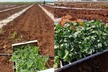
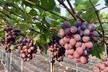
Malatya in Turkey, which accounts for about 85% of global dried apricot production, is entering the budding stage following frost damage recorded in April 2025. Early assessments from the region indicate improved crop conditions compared with earlier expectations.
Last spring's frost caused widespread losses across orchards in the country's main apricot-growing region. Provincial authorities and growers introduced recovery measures during the past season.
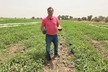
Provincial Director of Agriculture and Forestry Osman Akar stated, "As far as we can see, there are no problems with the trees. Hopefully, we expect a high-quality yield this year." He said the outcome reflects government support and grower management practices.
The Turkish government provided about 7.7 billion TL (about US$240 million) in relief support to farmers in Malatya. This included direct payments of 5,500 TL per decare (about US$170 per 0.1 hectare) to around 40,000 registered farmers. An additional 3.1 billion TL (about US$97 million) was distributed through agricultural insurance schemes.
Authorities also implemented a farmer training program. Engineers from the Provincial Directorate held sessions across districts focusing on nutrient management and crop protection practices.
Şevket Fidan, an engineer at the directorate, said: "In most of our orchards, our trees have reached the stage where they will bear fruit." Based on field assessments, sector observers expect recovery levels between 60% and 80% of normal production in 2026.
Export data reflects the production shortfall recorded after the frost. Between August 1, 2025, and February 28, 2026, Turkey exported 20,007 tons of dried apricots and related products. During the same period in the previous season, exports reached 55,479 tons.
Shipments to the European Union declined by 60% year-on-year to 6,420 tons. Export volumes were affected by lower production and higher market prices.
As apricot trees move from budding toward the flowering stage, weather conditions during the coming weeks will influence crop development in the region.
Source: Mintec/Expana