Over the past two or three seasons, a "new" exotic fruit has taken the fresh produce market by storm: dates. New, not because it was unknown, but rather because it was ignored by the general public and non-specialist professionals. The date market was only really busy just before Ramadan, as this fruit has long been culturally associated with an ethnic and Muslim consumer base.
It is remarkable, therefore, to see how this fruit has taken over major international fresh produce trade shows, from Fruit Logistica to Fruit Attraction, Anuga, Biofach, and others. The Egyptian trade show Food Africa has even launched a spin-off sub-fair called "Date Africa." Dates, particularly the Medjool variety, are increasingly present on stands, with an ever-growing number of exhibitors, as evidenced by the latest edition of Fruit Logistica. "It's one of the most-tasted fruits among fair visitors, who keep asking for one more," says one exhibitor. Alongside this B2B work, the fruit is a sensation on social media, particularly among influencers interested in healthy eating. It was only a matter of time before dates emerged from their "Ramadanesque" box to become a mainstream fruit.
 © Daktyli.pl
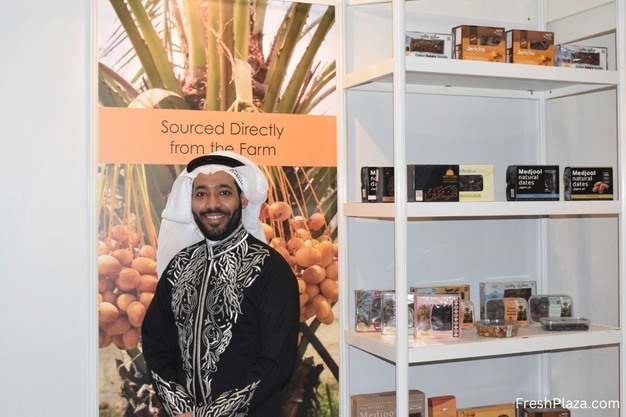
"It happened. The market mutation in Medjool dates happened this season. We anticipated it, but we weren't ready," declares Mohammed Alamoodi, CEO of Daktyli.pl, a professional who has specialized in dates for a decade, in something of a landmark statement. "We saw it for the first time this season. The fruit is very popular with consumers, demand is very high, and all origins have exhausted their stocks or are about to do so. The scale of this change in the market is such that we will spend a good part of the year out of work, despite the increase in production this season across all origins," he continues.
Medjool dates are chosen by professionals and consumers
It is not surprising that dates are in high demand in countries with large Muslim populations, especially as Ramadan approaches. The big news is that dates are now being exported everywhere, and that demand is mostly for high-end varieties. Alamoodi says: "There is no doubt that the Medjool variety is the most popular, as it made for 70% of our sales volumes this season. It is a high-end variety prized for its size, skin separation, and above all for its nutritional and energy value. This proves that consumption is no longer linked to a specific culture or ethnicity. Better still, we have seen a surge in demand this season in smaller markets and among non-Muslim populations, such as in Malta, the Czech Republic, and Lithuania."

Several factors have contributed to the Medjool variety standing out this season. Alamoodi explains, "The Mazafati variety has been less present on the market this year due to the security situation in Iran, especially since the twelve-day war. Buyers have simply preferred to avoid risks and have overlooked this variety this season. There is strong demand for other dates, such as Deglet Nour, Khalas, and Saudi varieties such as Sukkary and Ajwa, but they are still confined to a consumer base that knows and is accustomed to them. The most important thing to know is that, beyond the geopolitical or logistical situation, the reasons why Medjool dates stand out are their appeal to a wider audience, who prefer large sizes, vibrant color, uniform appearance, low skin separation, and more flesh."
The superior quality of Medjool dates this season is complicating sales
Dates are classified into five quality categories, Alamoodi points out, namely classic, delight, choice, premium, and super premium, based on skin separation and wrinkling, moisture content, coloring, and uniformity. Next comes size, with super jumbo and jumbo dates preferred over large, medium, and small dates. The trader adds that the most widely distributed category in terms of volume is the classic category in large sizes intended for supermarkets, which combines affordable pricing and decent quality.
 © Youness Bensaid | FreshPlaza.com
This season, improved production across all regions of origin has disrupted this distribution model. Alamoodit explains: "Nature has produced so many premium dates this season that we have been unable to source enough dates of the classic range to meet supermarket orders. This has even led to a slight drop in prices for the highest quality dates this season! This became evident during the period of high demand just before Ramadan. Whether in Jordan, Palestine, or Israel, our producers sold out of stock very early, and we barely survived the peak demand."
According to several growers, the drop in supermarket supply has led to a marked increase in online and B2C sales this season. Alamoodi confirms: "B2C sales are developing as a new market in their own right. Many consumers are now aware of the importance of origin and brand, and buy from the source or the immediate source. This trend is furthermore boosted by the shortage of Medjool on supermarket shelves, bearing also in mind that a part of previous supermarket sales is naturally passed on to B2C sales."
For the rest of the 2025/2026 season, the trader expects limited volumes but affordable prices: "Almost all producers are out of stock. The remaining volumes are of superior quality, and producers and exporters will have to lower their prices to sell them. I expect prices to decrease, at least temporarily, after Ramadan, so that the market can recover. "
"What is certain is that stocks will not be sufficient and there will be periods of shortage of Medjool dates until September, next season. Beyond this season, we will have to think about supply strategies to meet demand in the coming years," the trader adds.
Recourse to distant origins and alternative varieties
Alamoodi shares that he sources Medjool dates from three origins, which may not be sufficient going forward. "At Daktyli.pl, we rely on large-scale growers in Palestine, Israel, and Jordan. For the coming seasons, we plan to expand our origins, but this is a path fraught with challenges.

One possible option is Morocco, known for its excellent quality Medjool dates, but these are also the most expensive on the market and difficult to source as they are available in limited quantities and must be reserved well in advance. Similarly, we have not yet imported Egyptian Medjool dates, as we see a disparity between production, which is recent in the country and still lacks development and experience, but is priced similarly to more established origins in the industry. We will also have to knock on the doors of distant producers such as South Africa and the United States, which requires initiation in these markets and mastering the logistics," Alamoodi continues.
Alternative varieties to Medjool, whose current production will not be sufficient to meet demand according to several producers, could gain ground. On the European market, the Deglet Nour variety is the most likely candidate, according to Alamoodi. He adds, "Deglet Nour is known for its quality and characteristics, which are substitutable for those of Medjool dates. However, this season we have had a lot of difficulty sourcing them. There have been very long delays in the ports of Algeria, our main source of Deglet Nour, due to strikes. We had to ship them by air during periods of shortage, which drove up prices. Tunisia took advantage of this situation this season with good export volumes to Europe. Finally, Libya is also a major producer of this variety, but so far it has been absent from the international market."
"All it took was tasting one"
Behind the trajectory of dates, particularly Medjool dates, which have gone from being an unknown fruit to a fashionable product in recent seasons and a mainstream product this season, lies a valuable lesson, according to Alamoodi. "The example I like to give is that of one of my professional buyers. He had been buying dates from us for his customers for a long time, but had always refused to taste them, perhaps out of bias. Recently, at my insistence, he tasted a Medjool date for the first time and was thrilled. He immediately shot a video, and it just so happens that he has a large following on a popular social media platform. Not only did he become a new consumer himself, but he also saw orders pouring in. This story sums up the rise of dates in the market: all it took was tasting one.

At Daktyli.pl, we are honored to be part of this breakthrough on our own scale, as one of the pioneers in introducing this product to Eastern Europe, with significant expansion into Western Europe this season. We have maintained our leading position in Poland and neighboring markets, notably with the largest online store in terms of volume, and with an overall increase in sales volume of 20% compared to the previous year," Alamoodi concludes.
For more information:
Mohammed Alamoodi
Daktyli.pl
Tel: +48507665861
Email: [email protected]
www.daktyli.pl