With some shifts in the overall fruit market right now, the shelves could look slightly different for winter fruit availability in the coming weeks. The team from Procacci Brothers provides an outlook on what might be ahead.
Navels: "On the supply of citrus, navels specifically, small sizes are going to continue to be tight in California for the remainder of the season with bigger sizes plentiful right now," says Procacci Brothers' Domenic Russo. "There will also continue to be more big sizes than small sizes. While 138s are almost non-existent, on 113s, you can find pallet volume here or there."
Meanwhile 40s to 56s are the plentiful sizes and those will continue to be that way for the rest of the season.
Mandarins: California is heavy on smaller mandarins, especially the Tango variety which is being harvested right now. Other varieties are seeing bigger sizing. "Mandarins in general for the U.S. market are expected to be tight. Morocco is falling down on their mandarins. We expect it to stay this way for two months," says Russo.
Meanwhile the demand for these items is good because the supply is short with importers buying to try and cover retail orders. "Shippers are losing some money to cover orders. I would expect an upcharge of $2 on contracts for the remainder of the season," says Russo.
In stone fruit, the company's supplies are coming out of Chile right now and the season is coming into its heavier volume period. Chile saw good growing conditions for stone fruit which in turn, brought the crop on approximately 10-14 days early this year.
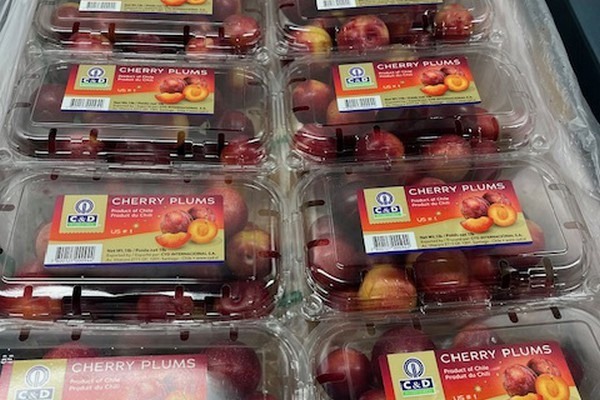 © Procacci BrothersThis year Chile is shipping more of a newer item--cherry plums.
Cherries: "The cherry season was successful with movement, which is coming to an end right now. It has about 10 to 14 days left with good movement on cherries," says Russo, noting that pricing is good for this time of year.
Nectarines: Nectarines are plentiful in the market with pricing about $18.00. Bigger sizes are a little more expensive and this too is expected to change over the next 10 days.
Plums: Demand is strong for plums given the supply is tighter and that's putting pricing between $28-$36.
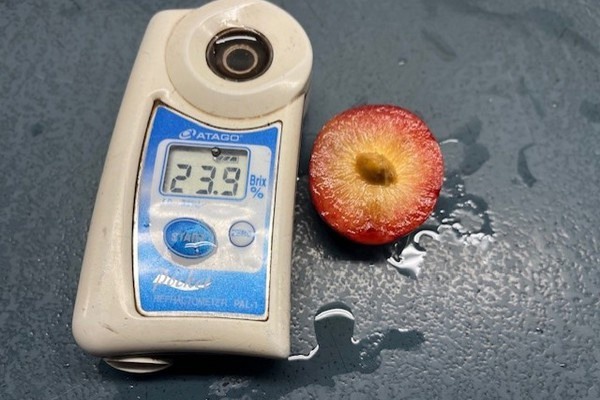
This year Chile is also shipping more cherry plums, a newer item for them. "It's not big volume but there's enough volume to spread to the east and west coast on this niche item," says Russo, noting that in the U.S., they will largely be available in one-lb. clamshell containers.
Shifts in volume could also be ahead. "With Chilean stone fruit, pricing in China has fallen off drastically so Chilean growers are expecting to route more stone fruit to the U.S. which could deplete our market a little bit," says Russo. "It's not 100 percent yet but how much volume they'll reallocate is up for discussion."
 © Procacci Brothers
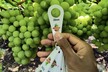
A peek inside the cherry plum.
Looking ahead and getting into mid-March, demand is expected to pick back up as Chilean peaches and nectarines will end, and plums will go through June.
However, before then, there are some current market dynamics in the fruit category that could strengthen demand for stone fruit particularly. "Customers want fresh fruit and demand goes to what's available. Banana availability is seeing a bit of fluctuation right now and there's generally short supply with increasing prices expected for the next few months," says Rick Feighery of Procacci Brothers.
"At the same time, this weekend's colder temperatures in Florida plus heat and rain in Mexico are anticipated to tighten the strawberry supply and produce very high markets in the next two months," says Feighery.
Joseph Procacci III of Procacci Brothers adds, " for apples and pears, the domestic supply is also anticipated to tighten soon and import pears are expected at the end of February while imported apples from Chile, Argentina and New Zealand should begin to arrive starting in late March. Put all of that together and it's going to put more focus on what's available which are peaches, plums and nectarines. There may be extra shelf space which is a real opportunity for stone fruit." "Stone fruit will have front and center availability for a good six weeks," says Russo.
Also on watch is the state of the U.S. dollar. "Though with the exchange rate and the dollar, it's a market. That variability is sustained across the world and we're in a world market," Procacci says. "South American growers have a choice of where they go with their fruit and they want to go to where the best market is. While the rate comes into play, we're all in the same playing field because with the exchange rate, there hasn't been a whole lot of volatility in that whether it's coming here or going to Europe."
 For more information:
Procacci Brothers
Tel: +1 (215) 463-8000
[email protected]
https://procaccibrothers.com/