Nigeria's agricultural sector is often presented through indicators such as hectares cultivated, yield gains, and crop expansion. Agriculture contributes around a quarter of national GDP and employs more people than any other sector. Despite this, rural poverty remains high, farm incomes are unstable, food prices continue to rise, and food imports persist even for crops produced domestically.
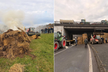
This situation reflects structural losses after production rather than insufficient output. Value is lost between harvest and market, while GDP accounting captures production but not post-harvest waste. Crops grown are recorded, but crops lost in transport, storage, or distribution are not. When logistics costs exceed crop value, or farmers absorb losses linked to system constraints, these effects are not reflected in headline economic data.
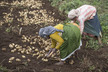
The recent collapse of strawberry marketing in Plateau State illustrates this dynamic. Farmers produced marketable strawberries, but air transport stopped, and road transport was unsuitable for a highly perishable crop with a shelf life of only days. Without alternative routes, processing options, or logistics backstops, losses accumulated and harvesting became economically questionable. This outcome was driven by logistics rather than agronomy.
Similar patterns are seen across other commodities. Tomatoes, fish, dairy, onions, mangoes, and vegetables face losses over longer timeframes. Production expands, post-harvest losses follow, farmer incomes decline, and imports fill supply gaps. The system measures output at the farm gate, not value retained through to the consumer.
Post-harvest losses are often framed as technical inefficiencies, but they function as macroeconomic leakages. They reduce farm incomes, contribute to food inflation, weaken incentives to invest, and limit the development of processing industries. Farmers bear the cost of these losses, reinforcing poverty and reducing resilience at the household level.
Nigeria's food system operates with limited integration between production, transport, storage, processing, and market access. Responsibility for the post-harvest segment is fragmented across sectors, leaving no clear accountability for value retention. In cases such as Plateau strawberries, value chains rely on single transport routes without redundancy or contingency planning.
In other agricultural economies, logistics and processing capacity are planned alongside production growth. Surplus volumes are redirected to processing when fresh markets fail, and multiple transport options are maintained. In Nigeria, production often expands first, with downstream systems developing unevenly or not at all.
The result is a pattern where food rots near production zones while processed substitutes are imported elsewhere. Imports respond to supply unreliability rather than market distortion. Over time, this weakens domestic value chains and limits income growth despite rising output.
The central issue is not how much Nigeria grows, but how much value is retained after harvest. Without addressing logistics, storage, and processing, agricultural growth can raise GDP figures without improving livelihoods.
Source: TheCable