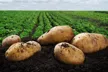
The harvest of PGI potatoes from Sila, Calabria, which began in mid-September, is coming to an end. "The final phase of farming has shown a slight improvement in the quantity of late varieties, bringing stock levels closer to those of last year," says Albino Carli, director of the Consortium of Associated Potato Producers (PPAS). While this news sounds positive, it clashes with a context that is far from ideal."
The crux of the matter is the difficult European market. Carli explains: "The main factor contributing to the current market saturation is the influx of foreign products at low prices. We anticipated this dynamic in September, and it has now fully manifested itself with direct consequences for the Italian supply chain. Foreign products are flooding the market and filling many shelves."

France has a strong presence in the fresh produce market, and products from Germany and Belgium can also be found in wholesale markets. "The French product is washable, which gives it a competitive edge in the large-scale retail sector," Carli points out. "However, the German and Belgian products, though lower quality, arrive at even lower prices and create additional problems." According to the director, this dynamic has completely overturned the balance of the last two seasons. The situation is now the opposite: "If supply was lower than demand in the past two years, today demand is lower than supply on a European scale."
Despite having a potato shortage, Carli points out that Italy is inevitably exposed to phases of oversupply in the European market. This creates a highly competitive environment in which "we cannot afford to make any mistakes." He adds, "If we only looked at our domestic market, we would have no problems, and all the products would sell easily. But we are in the EU market, and when there is overproduction in Northern Europe, that merchandise ends up here too, squeezing all our sales possibilities."
Emerging exceptions in this complex scenario
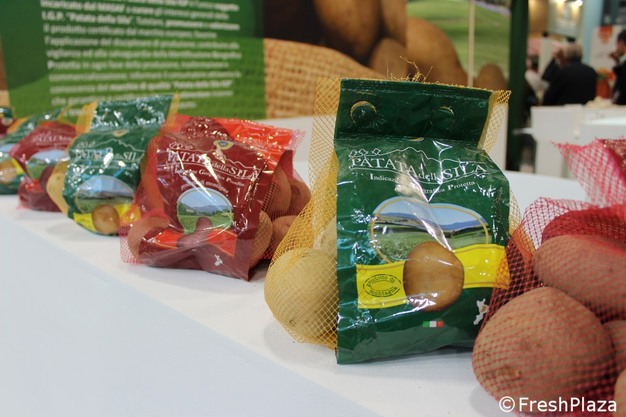
"Products that stand out are those with unique features, especially those with designations of origin, like the Patata della Sila (PGI). These designations continue to maintain attractive prices, ensuring the sustainability of the supply chain." Regarding sales, the Consortium has recorded results similar to last year's. "For the Patata della Sila (PGI), we don't see significant variations, and we're feeling optimistic. However, the situation for common potatoes and the industrial sector is different. There, the difficulties are evident. The industrial sector is suffering just as much as the conventional fresh sector."
 © Maria Luigia Brusco | FreshPlaza.com
Integrating labeled potatoes into the large-scale retail sector has been effortless. However, due to the crowded market, it is necessary to promote this product with additional initiatives, which is a commonly used strategy in times of uncertainty.
Christmas marks a period of significant decumulation
As December approaches, the PPAS director sees the upcoming holidays as a pivotal time. "Christmas is one of the most important times for potato consumption," says Carli. "We always look forward to it with great anticipation because the warehouses are operating at full capacity and the chains are planning numerous initiatives. It is a significant decumulation period that remains decisive. The forecasts are positive for now. I expect a normal Christmas."
There are signs that suggest a possible improvement in market conditions after Christmas. In recent weeks, interesting signals have emerged from abroad, particularly regarding the pricing of the highest-quality products. This suggests that market conditions could rebalance after December as well. "This rebalancing would lead to a slowdown in the influx of foreign products, especially lower-quality ones, and fairer quotations," Carli explains.

This change could lead to favorable scenarios during the second half of the commercial season. If prices abroad increase, products will return to Italy at more reasonable prices, creating opportunities for profitable sales. We have an advantage in the second half of the year because our mountain-sourced products are shelf-stable. We have traditionally maintained a high level of quality until the end of the commercial cycle.
Carli is moderately optimistic about the coming months. "We believe we can do our part, especially from January onward. If the market rebalances, high-quality products will certainly find their place."
The Patata della Sila (PGI) is once again being broadcast
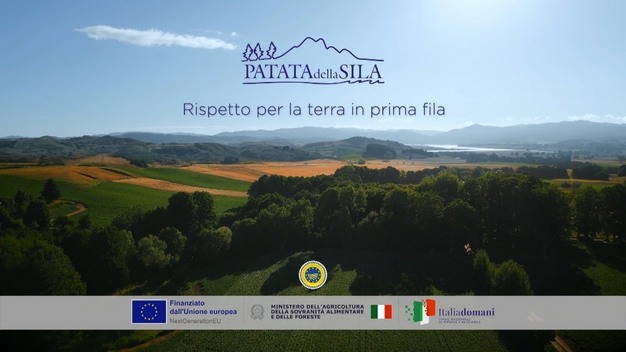
"Patata della Sila (PGI): Respect for the Land." This tagline will be featured in a new campaign starting in late November and continuing throughout the winter. The campaign is part of a broader agri-food chain contract financed by the European Union. The contract includes investments in regions renowned for producing high-quality PDO and PGI potatoes.
 © PPAS - Cons. Prod. Patate Ass. Soc. Cop.
The Patata della Sila (PGI) will be the focus of a multi-subject campaign on the Italian television networks Mediaset, La7, and Sky, as well as on the radio stations R105, R101, Virgin Radio, Radio Monte Carlo, Deejay, and Capital. The campaign will also appear in print, online, and on social media. Zefiro Advertising Agency created the 15-second spots and press advertisements and handled the media planning. CDP Open Field Productions was responsible for production.
The campaign highlights the sustainability of a crop whose producers have long been committed to adhering strictly to production specifications, demonstrating their commitment to respecting the land.
For more information: Consorzio produttori patate associati Soc. Coop. Agricola
C/da Garga 4 - S.S. 107 km 83,400
87055 San Giovanni in Fiore (CS) - Italy
[email protected]
www.patateppas.it