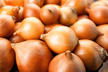
The Department of Agriculture in the Philippines expects red onion prices to ease in December as the larger share of import volumes arrives. Of the 59,594 metric tons of expected red onion imports for 2025, 11,371 metric tons had been delivered as of Nov. 13.
Current retail prices have reached P280 per kilo (about US$4.83) and up to P300 per kilo (about US$5.18) for imported varieties. According to the Department of Agriculture, this increase reflects tightening preharvest supply and the temporary import ban that remained in place until August.
Department of Agriculture spokesperson Arnel de Mesa said incoming volumes should bring retail levels closer to those seen earlier in the year. He said the target range is P120 to P150 per kilo (about US$2.07 to US$2.59). "The volume of expected imports until the end of the year is enough to cover our requirements, especially during the upcoming holiday season. The prices we are seeing now will go down gradually to P120 to P150 per kilo," he said.
For November, the Department of Agriculture anticipated the arrival of 18,660 metric tons, although only 1,480 metric tons had arrived by mid-month. De Mesa said the shortfall was not expected to create conditions similar to the 2022 onion shortage, when retail prices reached P700 (US$11.88) per kilo.
He said that in 2022, authorities had not cleared imports on schedule, which added pressure to the market. He added that increased cold storage capacity would support more regulated release of onions this season. "When the crisis started, we did not have enough cold storage facilities. That is why when the onions were harvested, they were immediately sold to traders who had a lot of control over the supply," he said.
Despite reduced local availability, the Department of Agriculture maintains that supply remains adequate.
Source: Inquirer