Six in ten Greek households run out of income by the 19th of the month. This is the line that perfectly summarizes the correlation of various economic indicators in today's Greece, years after the 2008–2012 crisis and despite the steady revitalization that the Greek economy has been experiencing since 2021.
 © Fotis Karabetsos | FreshPlaza.com
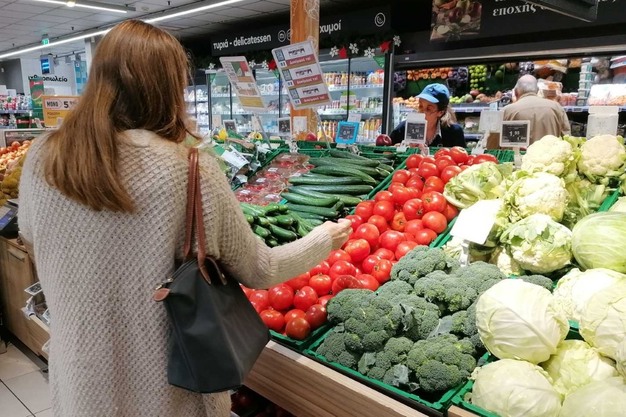
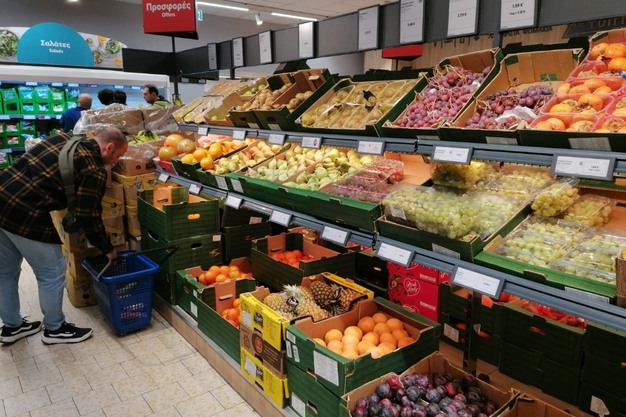
The rapidly increasing cost of living, including both the conversion of many previously non-profit services into profit-driven ones, whether private or still under state control, and the rising inflation's impact across economic life, while people's income decreases, has led to a growing impoverishment of Greek society. Of course, this could not leave out fresh produce consumption, whose increased turnover is achieved through fewer sales of costlier products.
 © Fotis Karabetsos | FreshPlaza.com
Salary decrease and depreciation
Starting from basic labor market figures, in February 2025, 21% of the total workforce in Greece was registered as either totally or partially unemployed — i.e., earning nothing or less than the minimum salary. As for the size of the various types of labor income, it remains shaped by a series of austerity laws adopted about 15 years ago. The most important of them include the abolition of the 13th and 14th pension for all pensioners, the abolition of critical allowances, and the abolition of the 13th and 14th salary for all employees in the public sector. At the same time, despite the minimum salary´s 10,5% increase from 2011 to 2024, the nominal average salary has decreased by 11% during the same period, meaning a steady depreciation of the workforce in Greece.
 © Fotis Karabetsos | FreshPlaza.com
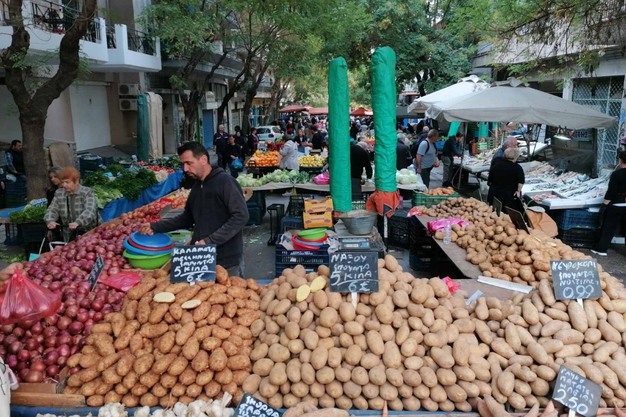
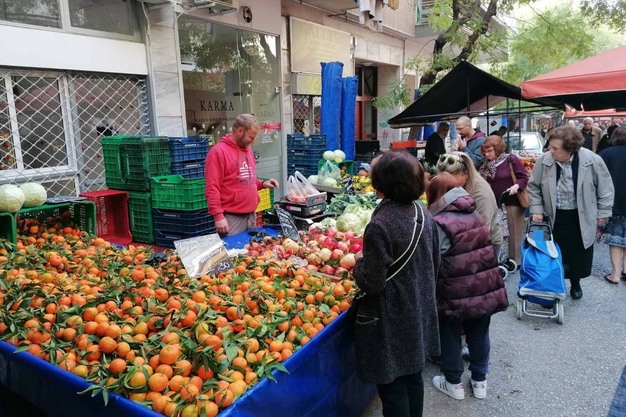
A typical people's market in Athens.
Spending more to buy less
However, the real value of that already decreased average salary is even lower, reaching a 22% decrease when the development of the Consumer Price Index over the same years is included in the calculation. Greece has been experiencing a tremendous rise in inflation since 2020, which, combined with the years-long decrease in income, has led to a drop in consumption across all foodstuffs. At the same time, despite lower consumption, foodstuff sales turnover has increased across all categories, as prices continue to rise.
 © Fotis Karabetsos | FreshPlaza.com
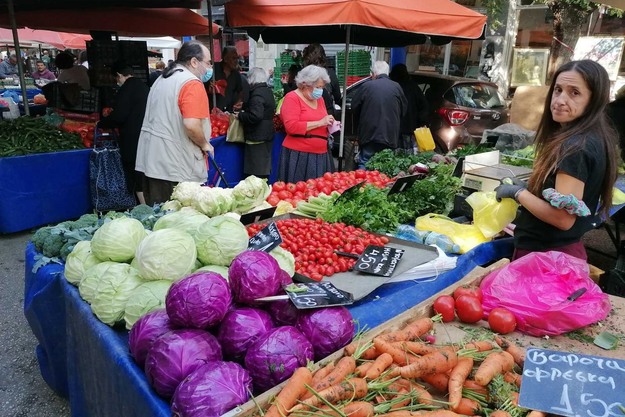
A typical people's market in Athens.
Keeping our analysis strictly focused on fruit and vegetables, their consumer prices increased from 2020 to 2023 by 31,3% and 31,8% respectively, according to a recent study by the Institute for Research on Retail Consumption (IELKA). The same Institute mentions that from 2009 to 2023, expenses for fruit increased by 14% and for vegetables by 15%, while their consumption decreased by 11% and 1% respectively.
 © Fotis Karabetsos | FreshPlaza.com
A typical people's market in Athens.
Less shopping after the middle of the month
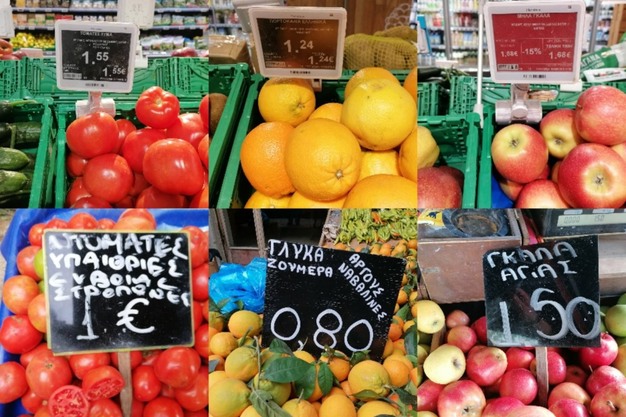
According to IELKA, despite differentiations between products, it seems that the biggest fresh produce sales share, about 50% of the total, is realized in the so-called "people's markets" (outdoor fresh produce and fishery markets where products are sold directly by growers or by small merchants and are almost always cheaper compared to supermarkets). Another 30% is sold through large retailers, 12% through small groceries, and 8% directly from growers. IELKA notes that the products mostly sold through people's markets are tomatoes (54%), oranges (52%), and apples (51%).
 © Fotis Karabetsos | FreshPlaza.com
An indicative price difference for the same varieties of Greek-grown tomatoes, oranges, and apples sold on the same day in a store of a large retailer (up) and in a people's market (down) situated on opposite sides of a street in a middle-income neighborhood in Athens. (17.11.25, Ano Patisia, Athens)
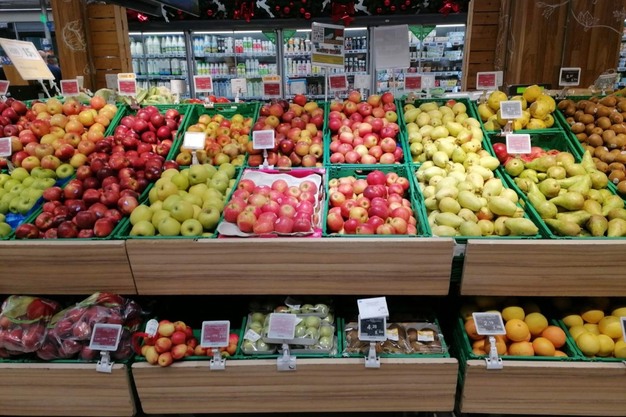
However, the growing difficulty in making ends meet in Greece is expressed even in this market channel. According to what Mr. Pantelis Moschos, president of the Panhellenic Association of People's Market Growers, says to FreshPlaza, "For many years now, people have stopped buying the formerly usual quantities of 5kg potatoes, oranges or apples. They have reduced these quantities by half. They first consume what they have bought, and then they come again. In any case, the consumer traffic in people's markets is obviously thinner after the middle of the month."
 © Fotis Karabetsos | FreshPlaza.com
Six in ten households run out of income by the 19th of the month
There are numerous studies and figures that could be presented to showcase the rising impoverishment of Greek society and its impact on its daily grocery shopping, but the most astonishing one was the research conducted by IME GSEVEE in 2025, revealing that despite imposing restrictions across all expense categories, 60% of households in Greece run out of income by the 19th of the month, while almost 82% of the total do not manage to save money at the end of the month.
 © Fotis Karabetsos | FreshPlaza.com