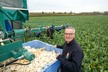
The winter season is now in full swing for organic outdoor vegetables. For grower Pieter Vandooren, most of the work is already done. "In terms of demand, it could be a bit better, because almost all products are available in abundance. Fortunately, much of our volume is sold through planned contracts, but day-to-day sales are very slow. This year once again shows how important contracts are."
 © Pieter Vandooren
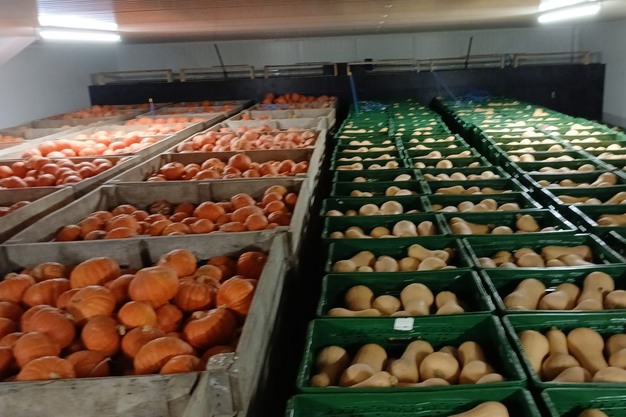
Almost all vegetables are now in for the organic grower from Hooglede, Belgium, where leeks, cauliflower, celeriac, fennel, and pumpkin dominate the season. "The cauliflowers were harvested last week, and the pumpkins are all in and stored. A portion of the celeriac is already harvested as well. We only need a few more crates to be delivered before we can continue. The last fennel is being harvested now; there is still a little left in the field, but that will be finished by the end of next week. Then, in terms of cauliflower, fennel, celeriac, and pumpkin, we are more or less set for the winter."
Day trade quiet
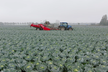
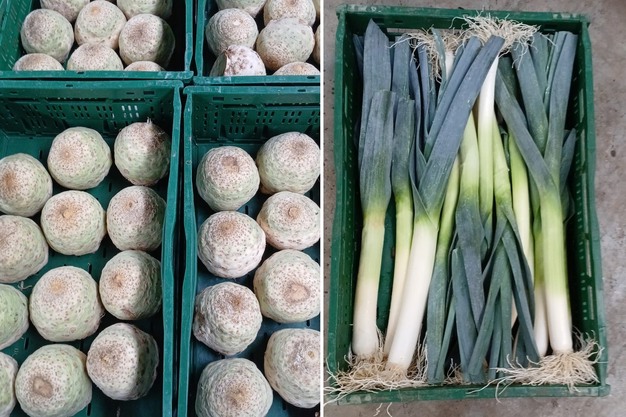
There were some concerns about leeks at the start of the season, but Pieter says the situation has improved. "We had some issues with thrips early on, but that is now under control. Thanks to the rain, the leeks recovered nicely. At one point, they were a bit light due to the drought, but that has corrected itself. Sales are progressing steadily. We mainly supply retail under fixed agreements, so we rarely face problems there. In day trading, however, demand is almost non-existent. That is really disappointing, but fortunately, it does not affect us much."
 © Pieter Vandooren
"In celeriac, we are also fairly covered, but demand for pumpkins could be better," Pieter continues. "The harvest itself is coming in nicely, though. We have a new washing installation and drying wall, which really helps. Many organic growers in Belgium still dry their pumpkins loosely in a shed, but we can now do it more effectively in a controlled environment. The hope is that demand will pick up later in the season. Of course, the mild weather is not helping the consumption of winter vegetables. When November is warm, people tend to choose tomatoes and cucumbers instead of leeks and squash. Colder weather is forecast for next week, so hopefully that will help."
Not enough storage space
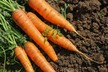
There are also challenges in the frozen segment, where Pieter supplies cauliflower. "There is demand, but the problem is a lack of storage capacity. Everything is plentiful. Brussels sprouts are abundant, carrots are being delivered, and all of that needs to be stored as well. Factories then have to rent additional space. But that is extremely expensive because the chip factories also are not selling what they would like to sell. So there is a kind of competition for the limited storage space available." And how does that get resolved? "Well, celeriac is being pushed forward to next year. Hopefully, there will be space again then, and I hear that some frozen produce from West Flanders is being sent to Vlissingen. They have large freezer rooms for rent there. So that is where it will be stored."
 © Pieter Vandooren
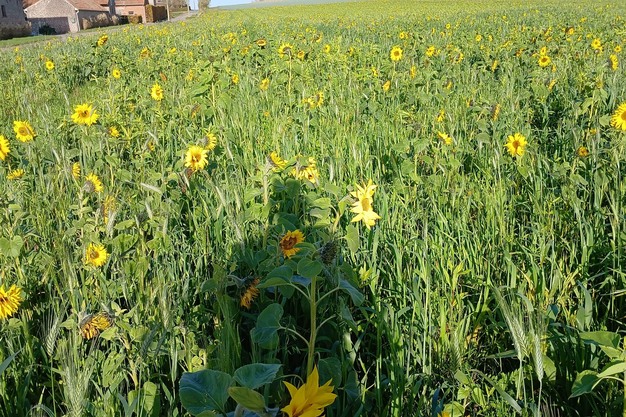
"We have been able to sow green cover crops in good conditions. A good basis for a successful harvest next year"
However, this situation forces growers and processors to choose what gets stored. "There is also a shortage of crates at the moment. There was a fire at Horafrost, so they need a lot of crates, which affects availability. So there is demand for certain products, but there also needs to be space and the capacity to sort and store them. These challenges are not always obvious, but everything is connected. If there is a problem somewhere, you always feel it further down the chain."
Contracts increasingly important
This shows once again how essential contracts have become in organic production, Pieter says. "Also, in conventional agriculture, relying on day trade is risky, but especially in organic, you need solid agreements. That is becoming very clear again this year. If you do not have contracts, you are in trouble. The market is simply saturated. Being dependent on day-to-day trading is becoming more and more problematic. Fortunately, we have strong relationships, and when you work well with retailers and honour your agreements, they appreciate it. It strengthens your position in the market, and they are not quick to drop you."
 © Pieter Vandooren
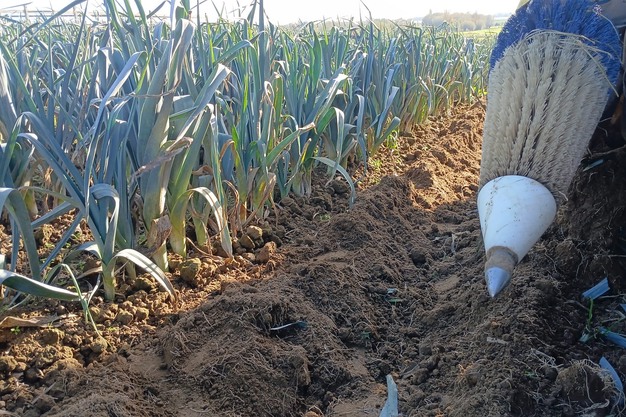
"It's definitely not too wet to harvest leeks"
For more information:
Pieter Vandooren
Yokkerstraat 6
8830 Hooglede, Belgium
Tel: +32 472292756
[email protected]