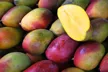
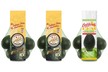
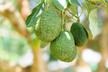
It isn't that long ago that avocado consumption was still rare in Spain. Some years later, it has become common and is fully present even in the ready-to-eat segment in the form of guacamole. The Costa Tropical is now just another production area for this fruit, which is highly prized in Europe, but its prices are not very different from those of imports.
"Avocados currently fetch between €1.70 for a Greenskin and up to €2 or €2.4 for a Hass. In Spain, there is a tendency to grow organic avocados because they are highly valued in some countries, even though they are more expensive than conventional avocados. Spanish organic avocados are sold out, even though they are 20% more expensive. Consumers are very interested in eating sustainable fruit," says Francisco de la Torre, Sales Director of Aguacatec La Victoria. On the other hand, "we think it will be a season with a great supply because, due to the U.S. tariffs, the avocado production from American suppliers could end up being shipped to Europe," says De la Torre.
 © Aguacatec La Victoria
Despite the global production, avocado prices are still high because "their production has significant costs. For instance, the price per cubic meter of water has risen a lot in the last few decades," says the manager, adding that "feeding the tree, phytosanitary products, and labor, with multiple prunings necessary, are costly. And if we are talking about imports, freight costs have also risen."
"Optimizing the water we have as much as possible".
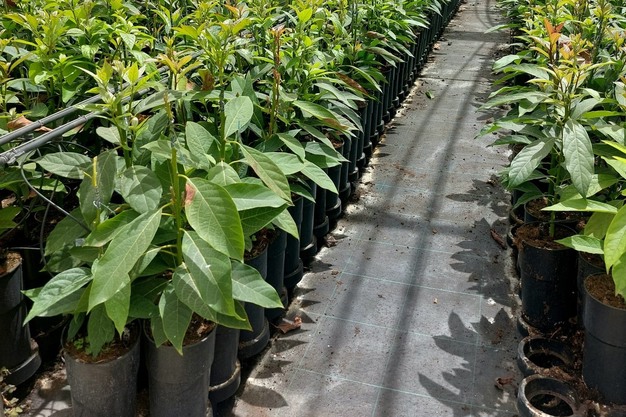
"Besides being marketers, we are also breeders, and we are very interested in Israeli rootstocks adapted to the harder, more saline water and climatic conditions we are facing," says De la Torre.
The new rootstocks, "such as Fairchild, Degania, and Ashdot, have better resistance when it comes to water, in a time when wells are being heavily exploited because it's not raining as much. You can also fit more plants in the same area. These varieties have better resistance to phytophthora, the fungus that attacks the roots."
Surprisingly, a subtropical fruit can become a flagship product in a desert country like Israel. According to De la Torre, "they had good land, but no water; they were pioneers in the installation of drip irrigation systems and have managed to turn avocados into a leading product."
In the manager's opinion, "on the tropical coast of Malaga, we have to make the most of water by giving it a second life cycle and supplementing it with desalinated water. The population is also growing, so water consumption is increasing everywhere. Although the Administration is implementing measures to facilitate water regeneration and building new pipelines to connect areas with more and less water, I think the key objective is to continue implementing all possible strategies to optimize the water resources we have."
In Spain, the season starts with the Greenskin, so called because it's green when ripe, and the Bacon from late October to December. These are then followed until April by the most popular variety: the Hass.
 © Aguacatec La Victoria
De la Torre says: "From December onwards, we overlap with Morocco, which starts producing at the same time as us. Also, Peruvians have managed to extend their avocado campaign until December thanks to the great improvements achieved in logistics, which are making it possible to consume Peruvian avocados in perfect condition up to three months after they are harvested."
"For now, avocados from Tanzania or Kenya are too expensive to transport, but I believe that Mexico is a country to be taken into account in September, when it is supplying Hass. We also find Colombian avocados very interesting because of the youth of the plants and the logistics," says the manager.
For more information:
Francisco de la Torre
Aguacatec La Victoria
Tel.: +34 630 49 45 17
[email protected]
https://aguacateclavictoria.com